

Chalk downland grassland is one of the richest habitats in the South of England. Once widespread, it is now very scarce, with only a few percent of the areas surviving the massive agricultural changes of the last 100 years. That wonderful springy turf loved by all walkers, is produced by ages long grazing of the downs, producing a wonderful variety of lime-loving flowers that live within the turf. Unfortunately, modern agricultural practices demand a greater return from the land than is possible using the traditional extensive grazing systems. As a result nearly all the traditionally managed grassland has now been lost – either to the plough for arable cultivation or to “soil improvement” by the additional of artificial fertilizers and reseeding with rye-grass mixtures that out-compete the less vigorous grasses and wild flowers.
Most of the surviving areas are in the more inaccessible places, making cost-effective use of the land very difficult (fortunately), and some of these have been rescued from continuing neglect by conservation agencies such as the Hampshire Wildlife Trust. One example is Old Burghclere Lime Pits . Many such sites have been left unmanaged (i.e. ungrazed) for many years, with the result that the grassland habitat is gradually swallowed up by encroaching scrub. On Chalk downland this scrub is generally very thorny – blackthorn, hawthorn, bramble and rose all compete to swamp the grass.
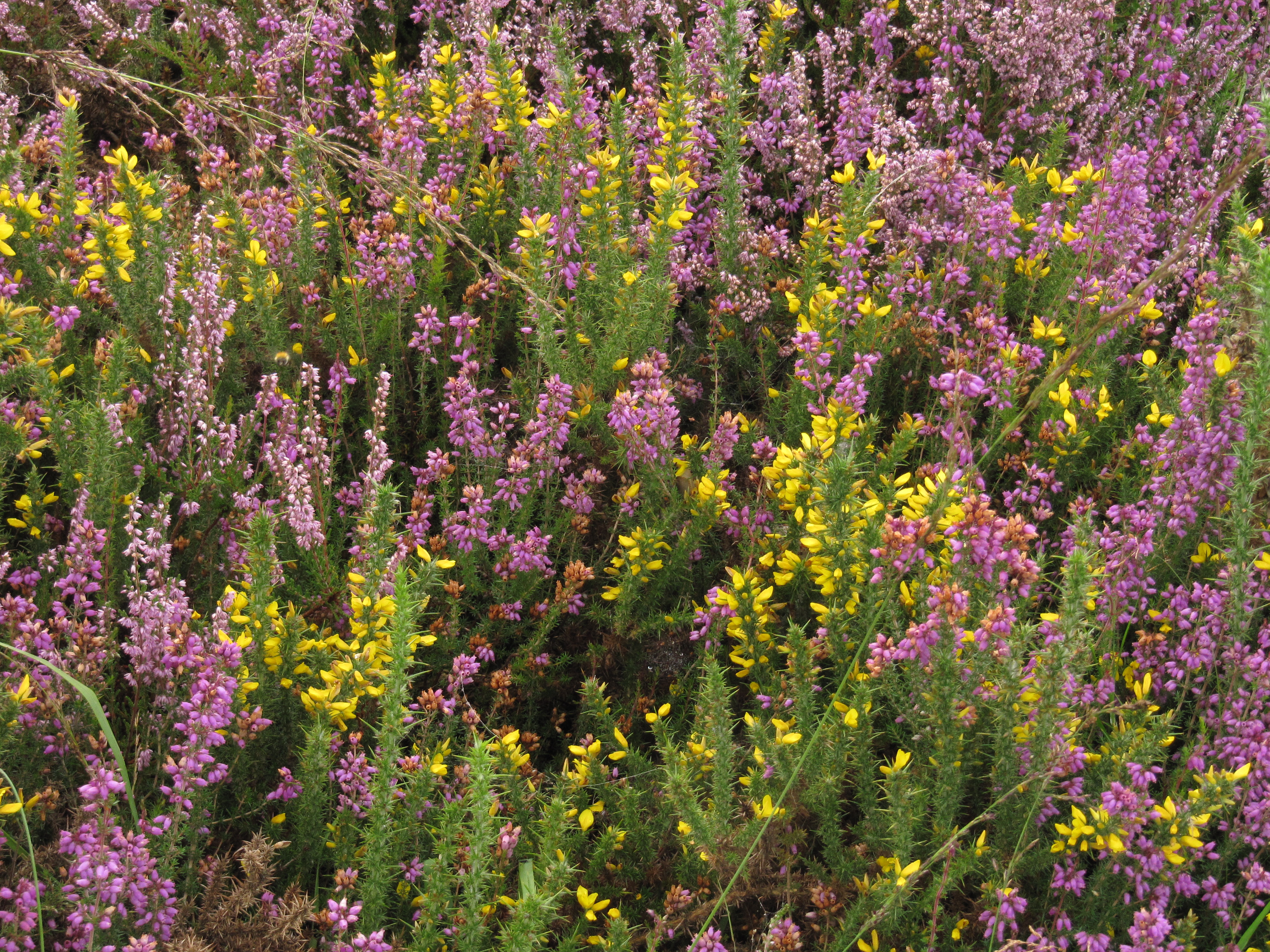
In contrast to chalk downland Lowland Heath tends to develop on sandy or gravel soils. It is a habitat dominated by low-growing shrubs such as heather and gorse. Although the botanical diversity is low, it has a very high diversity for invertebrates, many of which are rare. Reptiles and many insects need the open sunny conditions found here. The habitat has been maintained for thousands of years by human activity, like grazing of animals, collection of wood and gorse for fuel. The ground was dug on a small scale, for sand and gravel. In the 20th century the rural subsistence life that exploited the heathland disappeared, and they started to become dominated by increasing numbers of birch and oak trees. Many formerly treeless areas are now young woodland.
|
| A patch of heathland with Ling, Bell Heather and Dwarf Gorse |
So, the job of conservation volunteers is to cut back the scrub. Hopefully this is done as a short term measure to be replaced by beneficial grazing regimes once the scrub has been cleared sufficiently. Sometimes though, scrub bashing is the only management carried out on sites (usually for financial reasons), and in this case we are really just trying to preserve the good habitat that survives by preventing further invasion by the surrounding scrub.