

Send any BCV news or task reports to or write on the Facebook group
October 2026
Pond Maintenance at Ecchinswell Pond, 18th October 2026
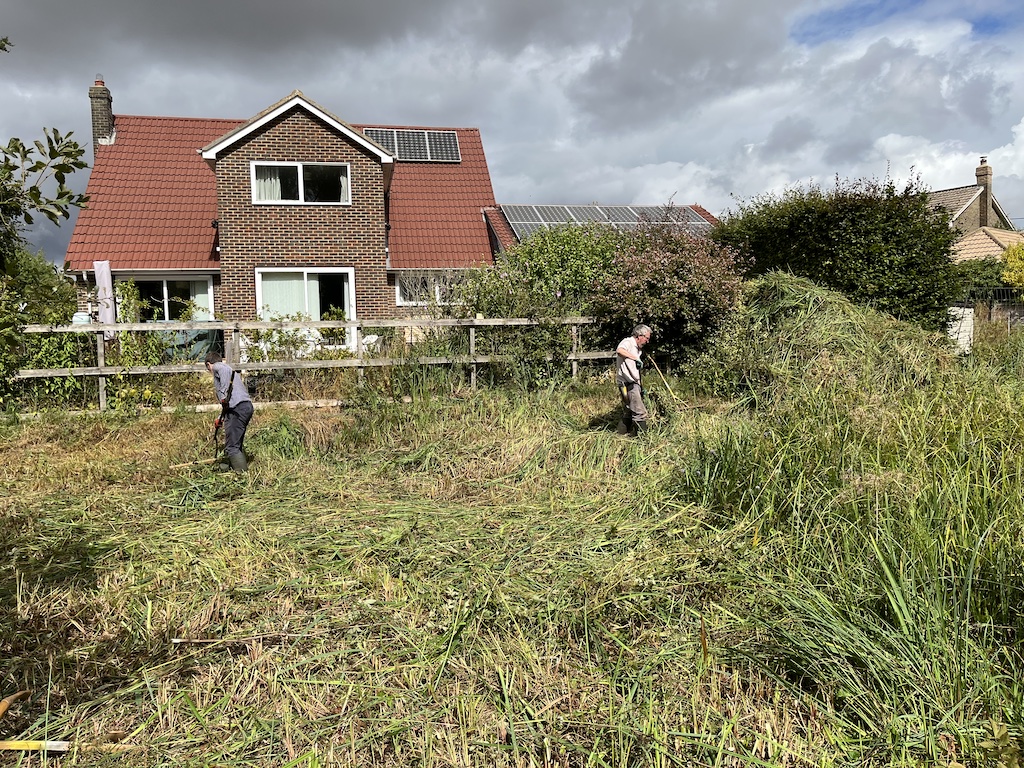
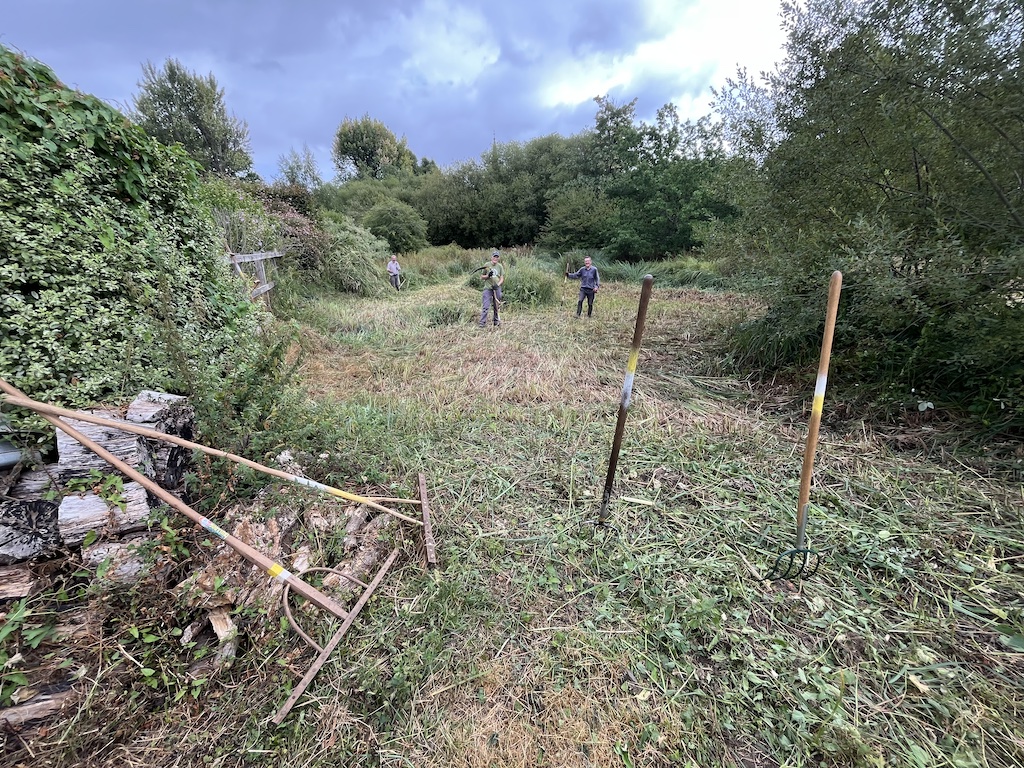
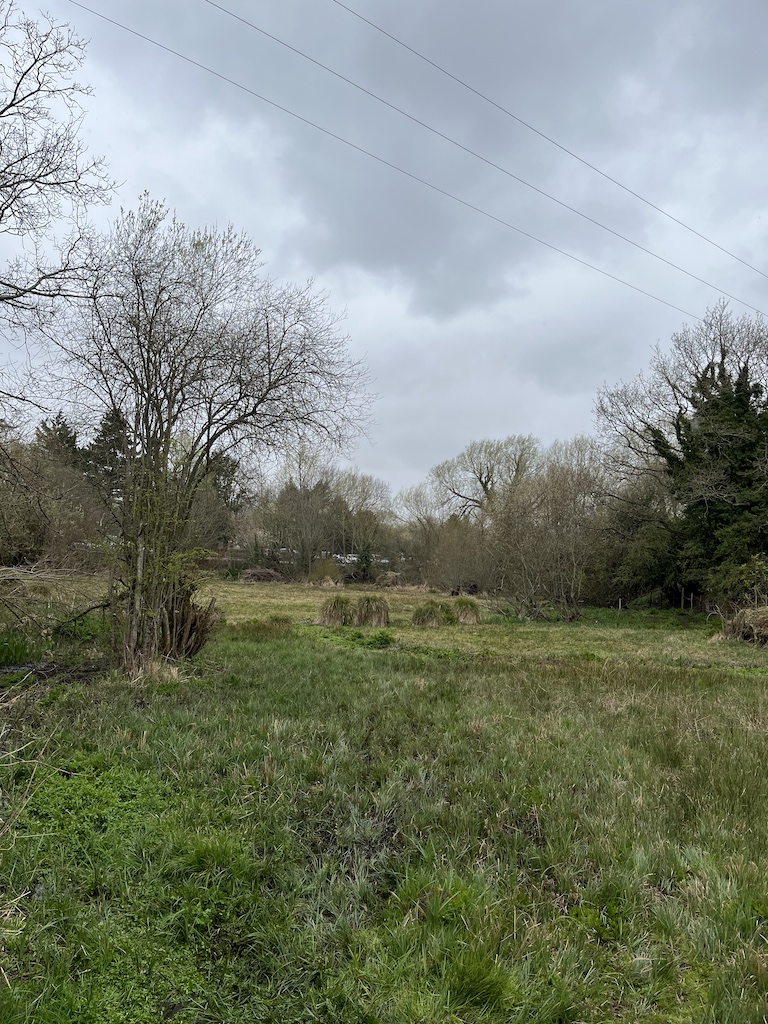
On our annual return to Ecchinswell, to help the villagers with the maintenance of the pond, this year’s hot dry summer meant that the the pond was almost completely dry, which influenced the work we were able to undertake. The bed of the pond had abundant growth of Flowering Rush, which we would normally try and reduce, but the dry conditions meant this was almost impossible to remove without physically digging out the bottom of the pond. This would have been beyond our resources, so instead we concentrated on pushing back the margins of the various stands of Reedmace around the margins. The dryness of the pond actually made this easier than normal, so, despite being relatively low in numbers this year, we made excellent progress, aided by a few volunteers from the village and sustained by cups of tea or coffee and chocolate treats. After the traditional lunch of hotdogs, we spent a little more time finishing off the last sections before tidying up and heading home with the satisfaction of a job well done. Hopefully the return of autumn rains will fill the pond back up before too long!
| The dry condition of the pond before we started. (Image by Mike Norman) | 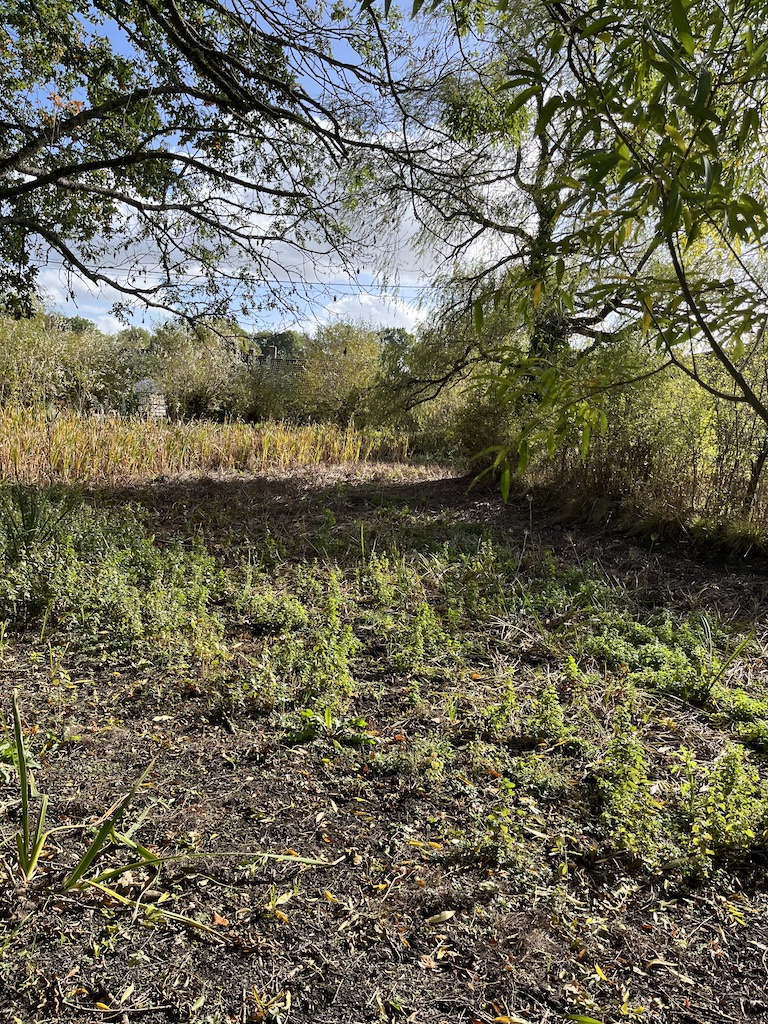 |
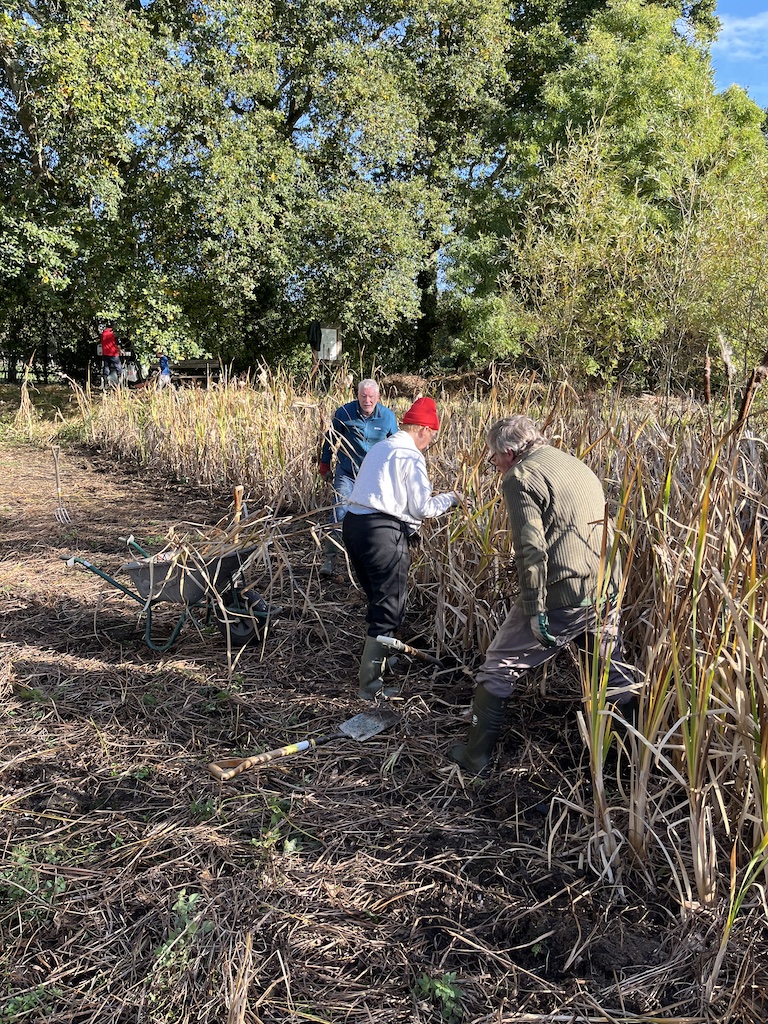 |
Dave, Tina and Howard making inroads into the biggest stand of Reedmace. (Image by Mike Norman) |
| Finishing off the last section after lunch. (Image by Lesley Davies) | 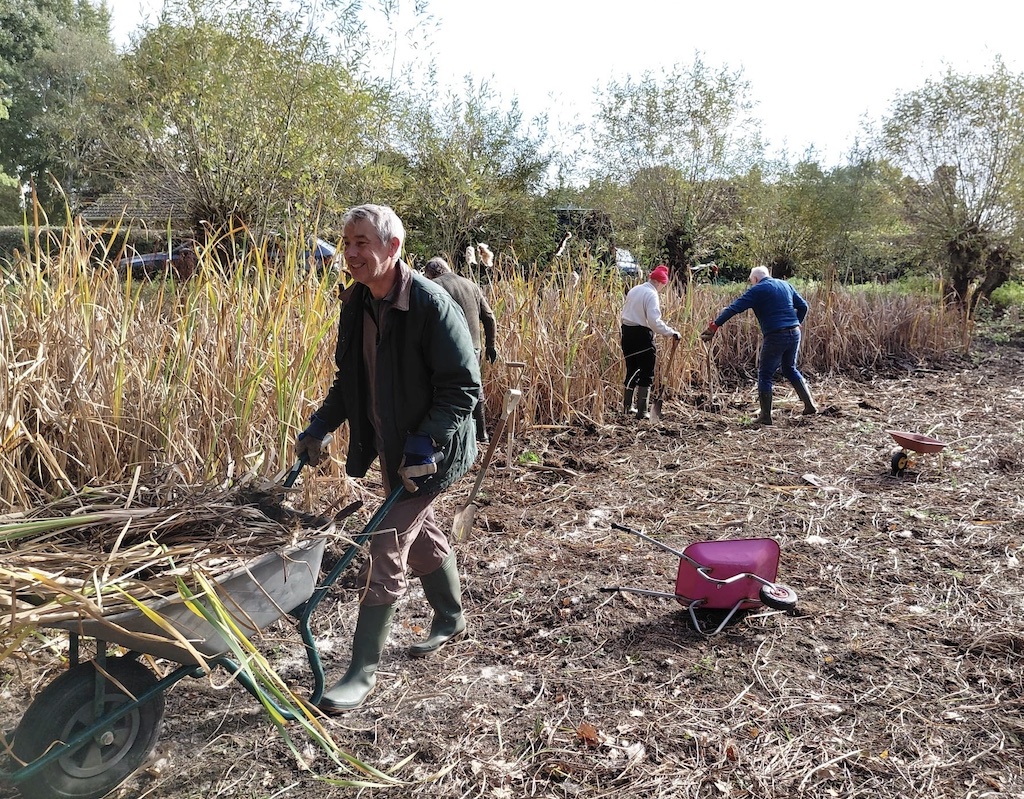 |
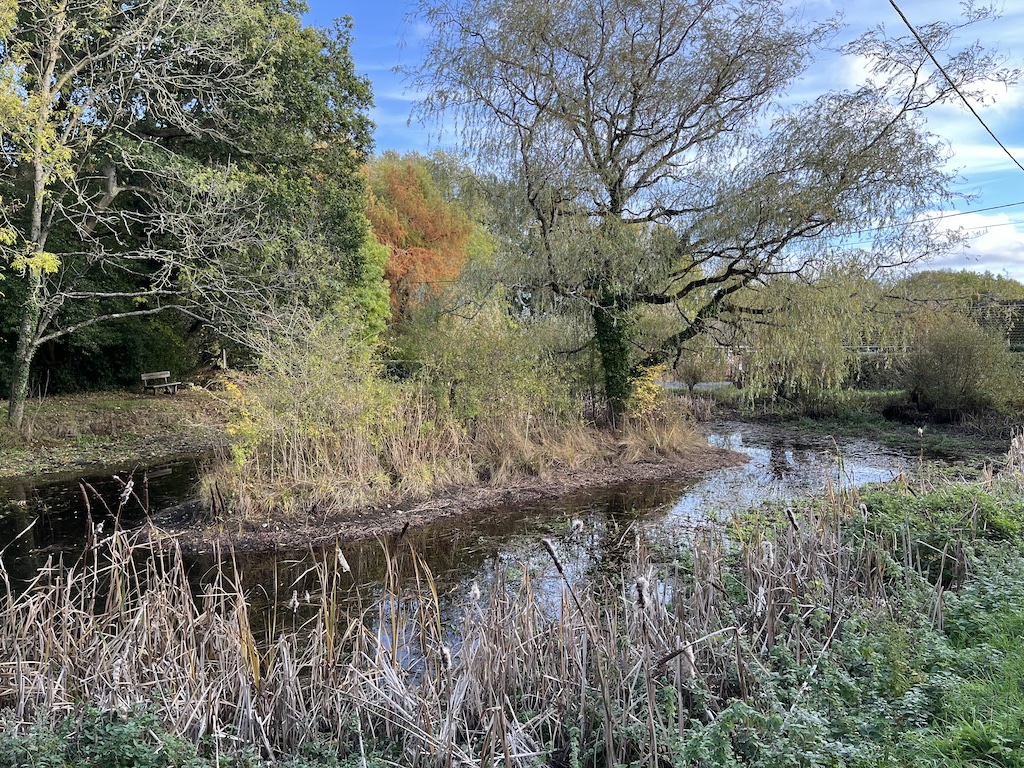 |
The pond a few days later, after some welcome rain. (Image by Mike Norman) |
September 2026
Scrub clearance at Lamb’s Field, Worting, 20th September 2026
Over the past few winters we have laid a hedge on the far side of this field in Worting. As this is now complete, we were asked to return to clear an area of blackthorn scrub that has grown up in the north-west corner of the field. An extra complication for this task was the presence of grazing sheep. In order for the scrub clearance to be effective, the cut stumps needed to be treated with herbicide; as this is potentially harmful to the sheep, it was necessary for a temporary fence to be installed around the designated area. This fence was provided by the owner of the sheep, but we had to install it. Stuart and Mike worked on that, while the rest of the group started cutting the scrub and getting a fire going. On a nice sunny day it soon became quite warm and we were glad of the shade of the trees along the field boundary. After lunch, while the rest of us continued with cutting, Dave J applied the herbicide to the cut stumps. The herbicide contains a bright blue dye so you can tell which stumps have been treated. By the end of the day we had cut about one half to one third of the designated area. The fence was to stay in place for at least seven days to ensure the herbicide was completely absorbed and dried before the sheep were let back in. We will probably return to continue this job later this autumn.
| Dave J gets the bonfire started while others attack the blackthorn. (image by Mike Norman) | 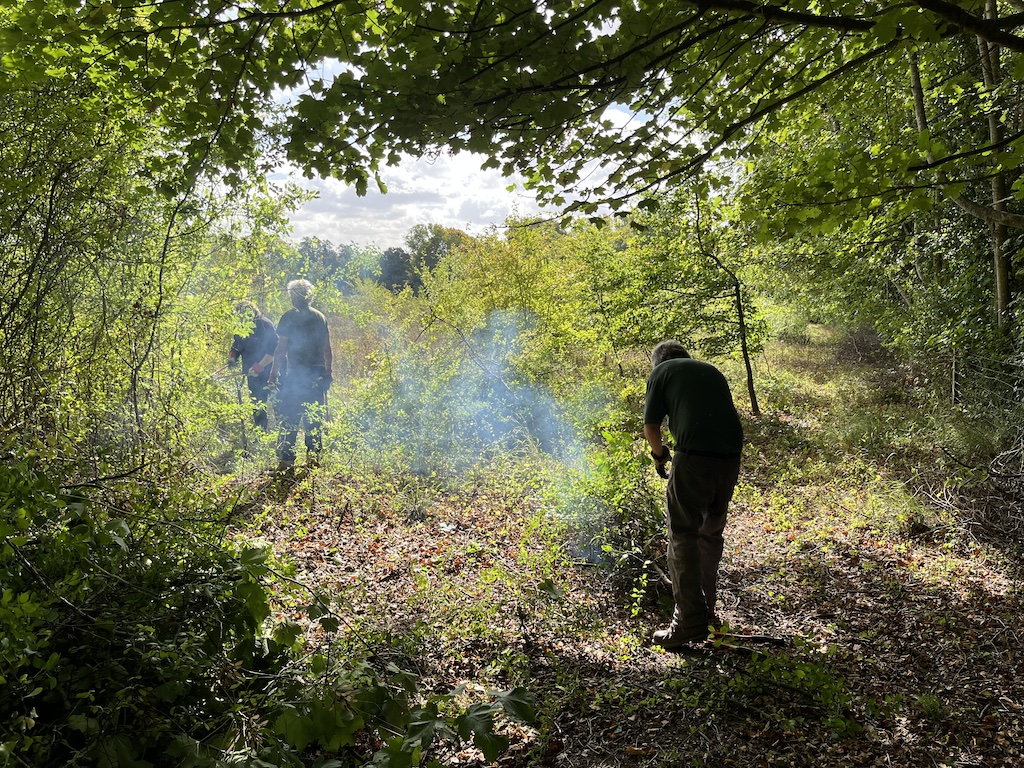 |
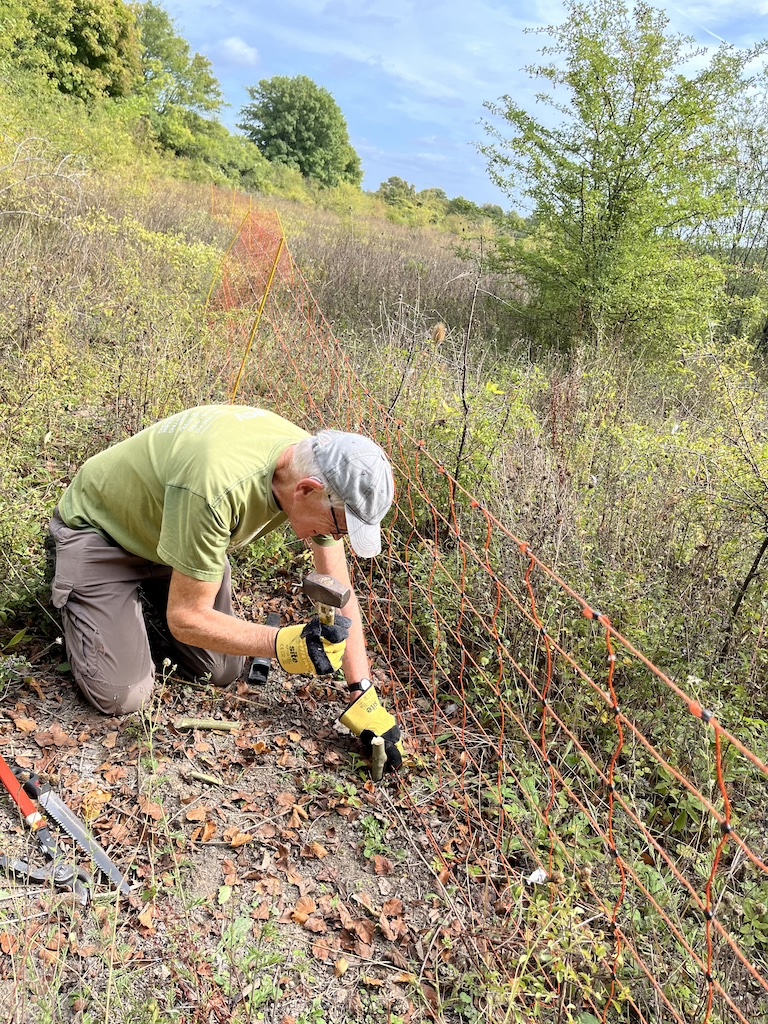 |
Stuart pegging down the bottom edge of the temporary fence. (Image by Mike Norman) |
| Dave applies herbicide to the cut stumps. (Image by Mike Norman) | 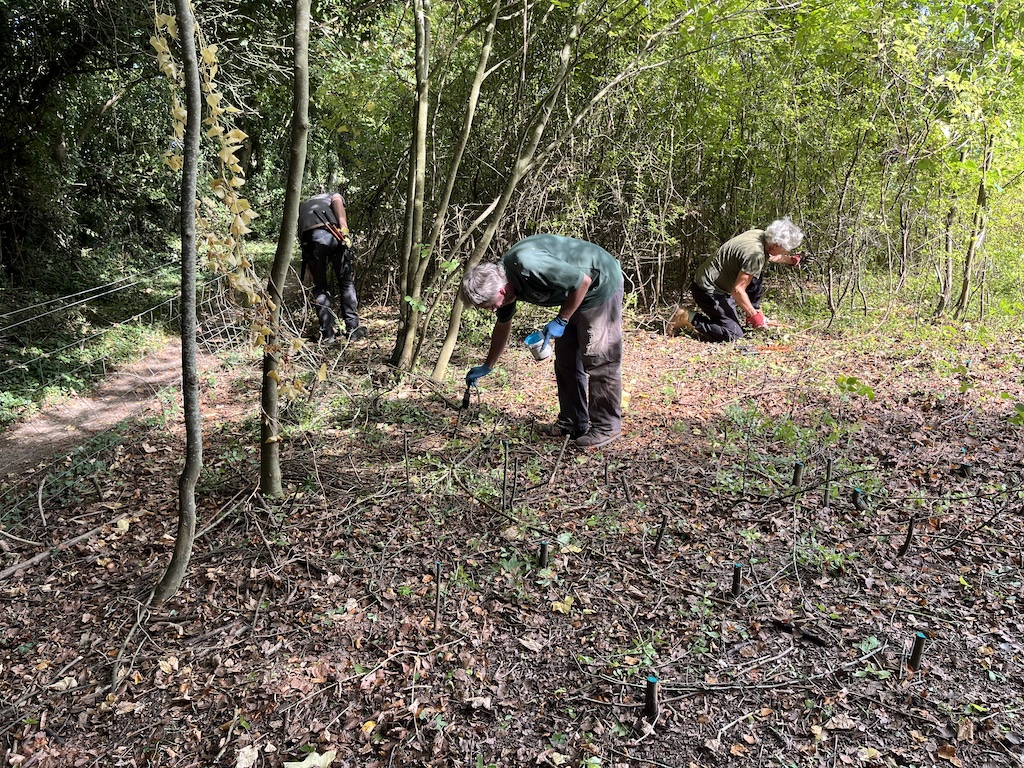 |
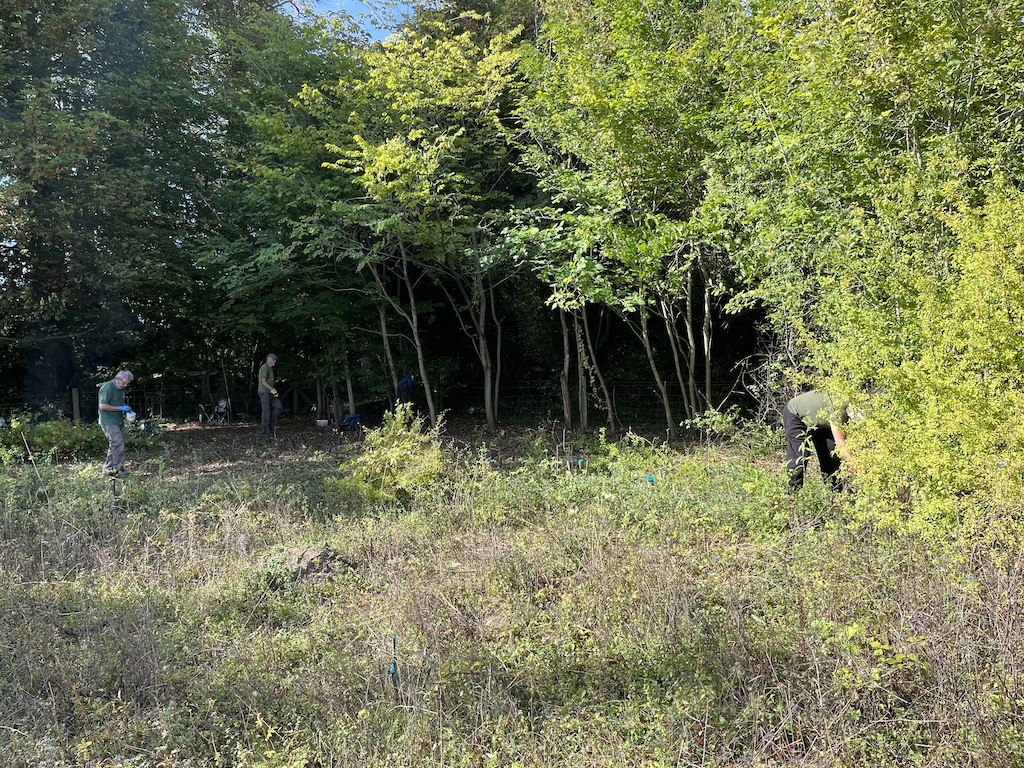 |
The cleared area towards the end of the day (Image by Mike Norman) |
August 2026
Fen-cutting at Paxton’s Meadow, Sherborne St John, 19th August 2026
As promised, a small team of BCV volunteers returned mid-week to complete the cut of this rich fen site in Sherborne St John. Once again, the dense state of the vegetation, with a mixture of sedges, Angelica, Willowherb and Bindweed made it hard going, while the forecast high temperatures meant that again we scheduled an early start. Although we covered the key areas between the garden and the stream, a pragmatic decision was made to leave the area at the far north end to the site. A key consideration here was to leave some uncut vegetation for the benefit of wildlife that relies on the cover of the lush growth. In the future this area can be cut while some other parts are left, thus establishing a rotation. This allowed us to finish by just after lunch, with the site in good shape for the year ahead.
| The dense state of the uncut areas! (Image by Mike Norman) | 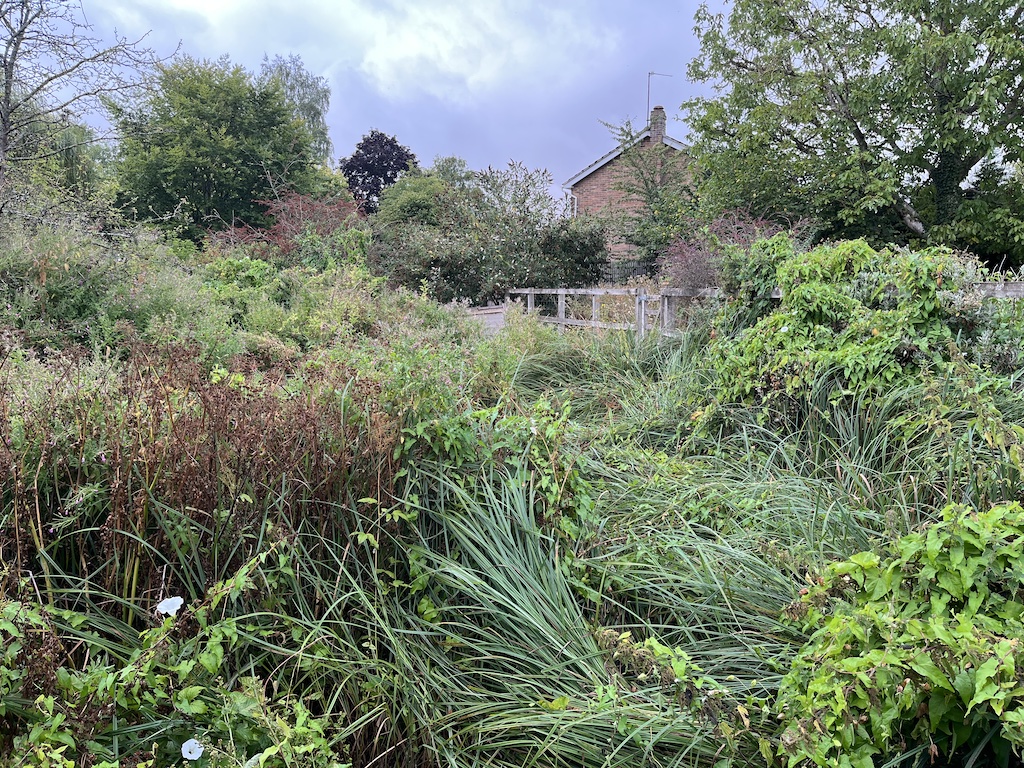 |
 |
Paul and Dave raking up cut material close to the house. (Image by Mike Norman) |
| The completed cut at the south end of the site. (Image by Mike Norman) | 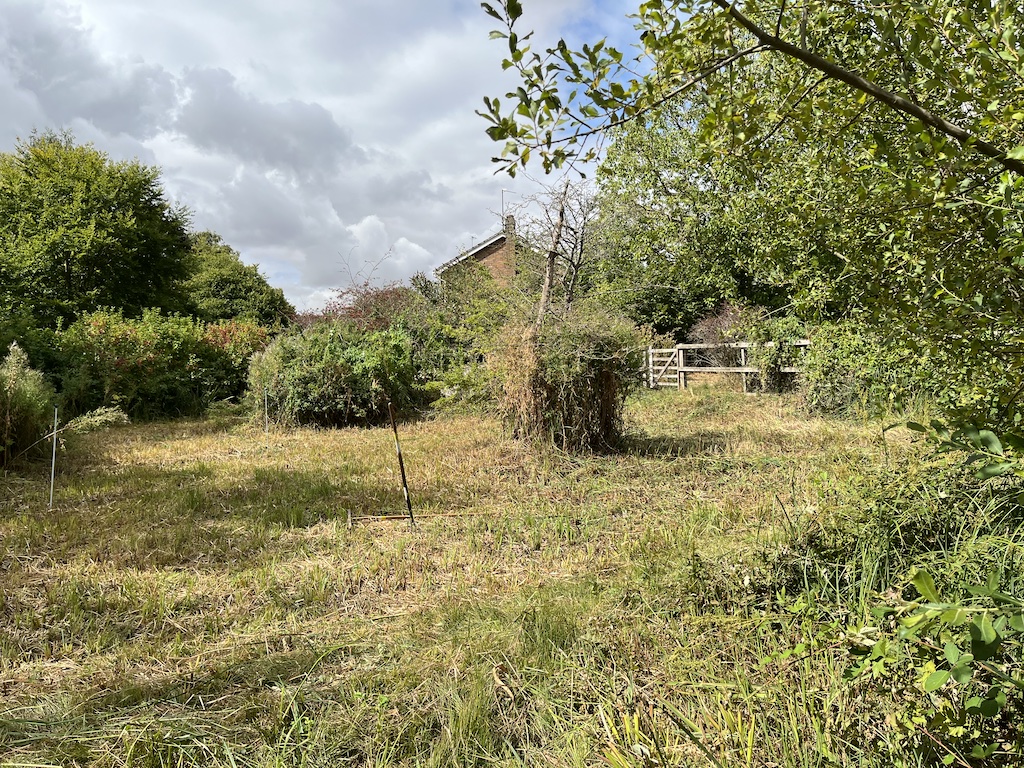 |
 |
The point at which we called it a day! (Image by Mike Norman) |
Fen-cutting at Paxton’s Meadow, Sherborne St John, 9th August 2026
Back in March we restarted management on this private fen in Sherborne St John, now under new ownership. Having completed that “rescue cut”, the next phase was to cut at the preferred time of year at the end of the summer. To that end, a small team of BCV’ers gathered to find that the fen vegetation had put on an amazing spurt of growth since March! Although this could partly be due to the hot summer, it is also likely that three years without management has fed extra nutrients back into the soil. As the fen is cut regularly, the vigour of the vegetation should recede again. With the limited number of people available, even with the assistance of the owners, and with an early finish due to the heat, it was only possible to cut a portion of the fen, the main area beyond the stream being finished but with some areas on the near side of the stream still to be dealt with. The plan was to look for an opportunity to return to complete the job.
| Dave L. makes a start on the “jungle” (Image by Matt Levee) | 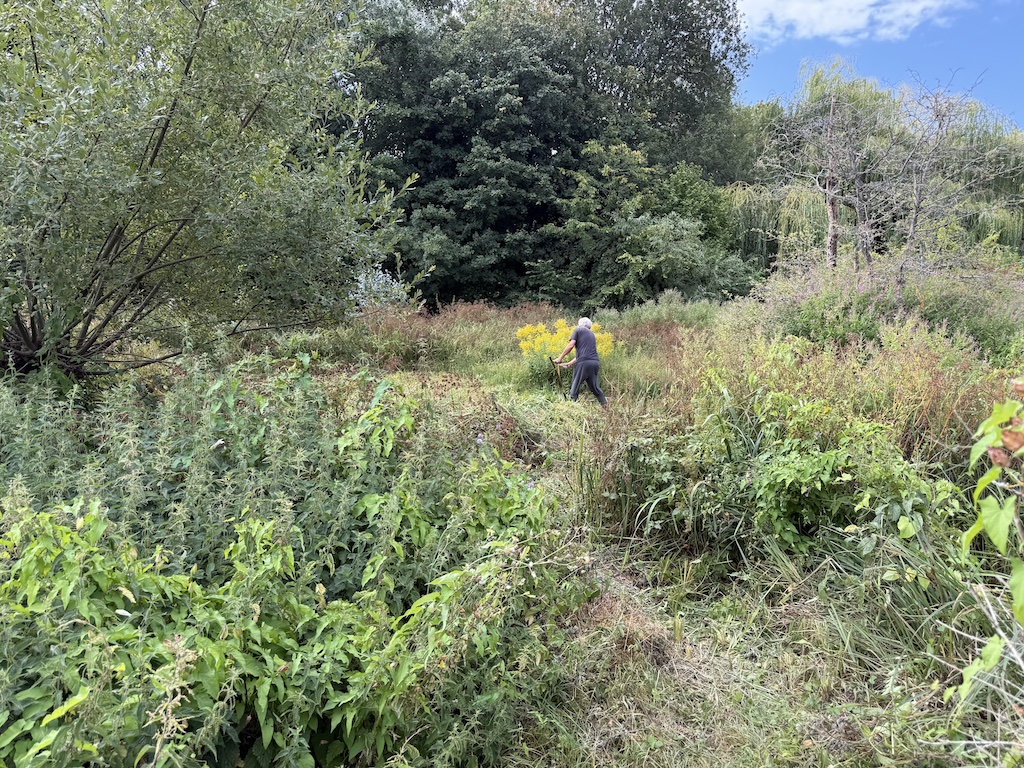 |
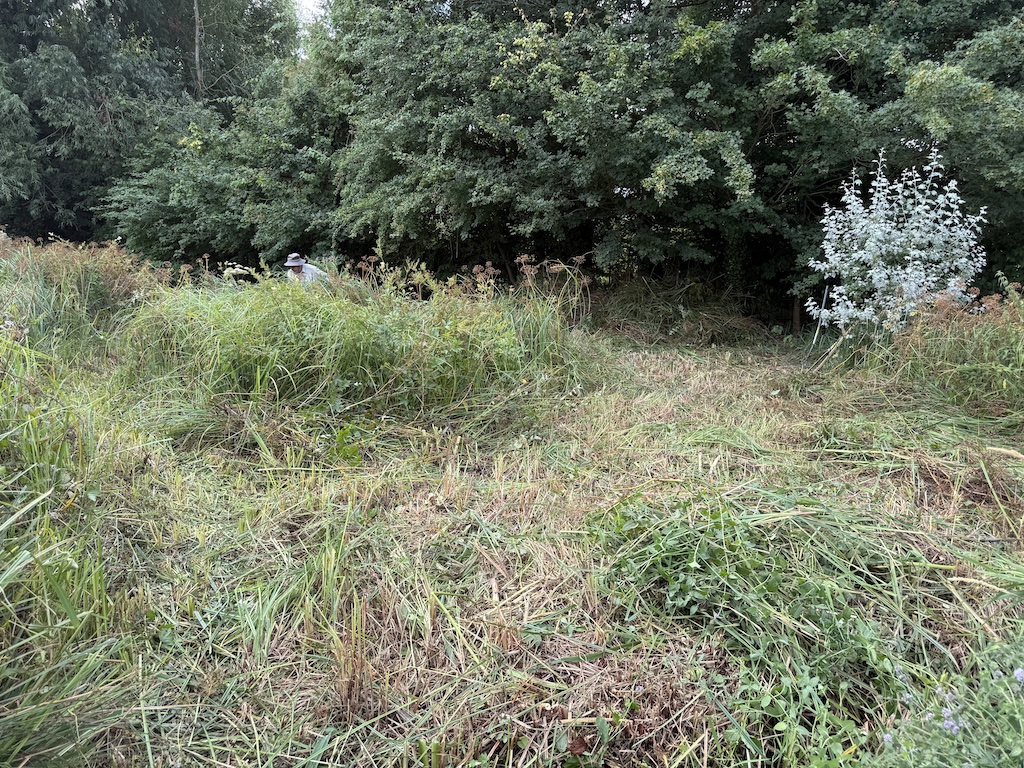 |
Dave J. looks nearly lost in the lush vegetation! (Image by Matt Levee) |
| The area beyond the stream nears completion. (Image by Matt Levee) | 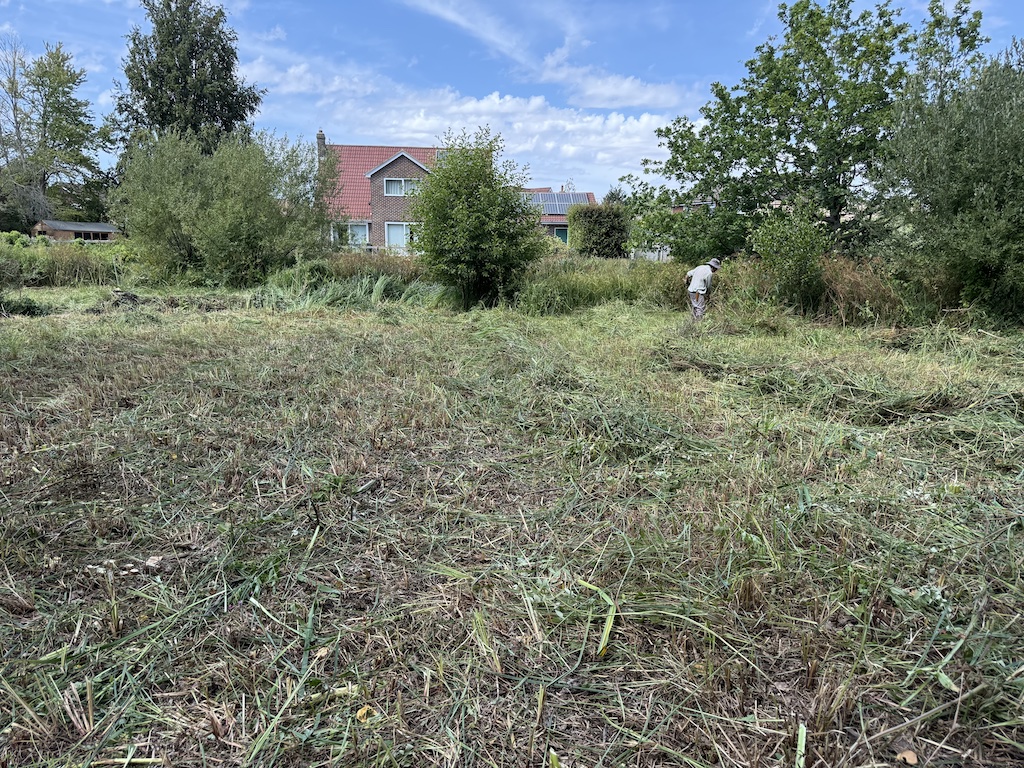 |
Basingstoke Bioblitz at Beggarwood Park, 1st August 2026
BCV ran a stall at the annual Basingstoke Bioblitz event, run by Basingstoke and Deane council and Natural Basingstoke, this year held at Beggarwood Park on the south-west side of Basingstoke. This was a chance to enhance our profile in the local community whilst networking with like-minded groups and individuals. As well as the chance to browse the stalls of other participants, a number of nature-viewing activities were run through the day, such as plant identification, a butterfly survey and a bug hunt. As usual this summer, the weather was set fair and a good number of people attended the event, with a few expressing an interest in BCV’s activities.
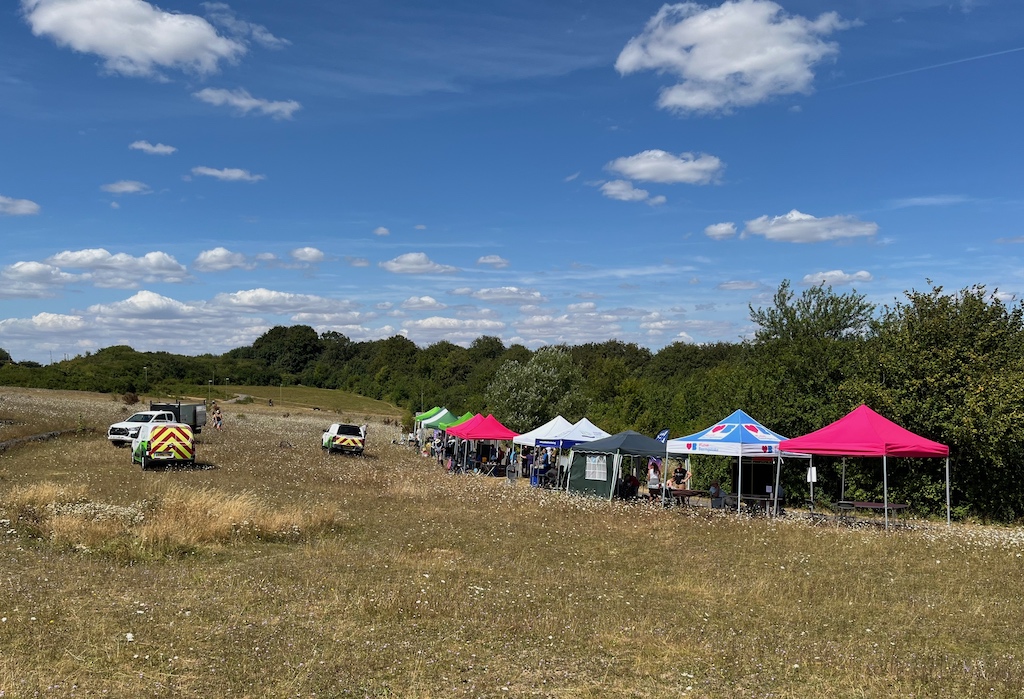 |
| Bioblitz stalls at Beggarwood Park. (Image by Mike Norman) |
July 2026
Grass-cutting at Cliddesden Church, 26th July 2026
We returned to St Leonards Church in Cliddesden to team up with the local volunteers to carry out the annual hay cut of the churchyard. Following a review of the condition of the meadow and consultation with the original management recommendations the cut has been rescheduled for late summer rather than the autumn or winter. This is felt to be more beneficial to the key plant species like Meadow Saxifrage and Yellow Rattle. As well as cutting the main open areas, a strimmer was used to cut round the gravestones, however, some of these were left untouched to benefit invertebrates that like tall grasses. Fortunately, the baking summer temperatures relented to make the working conditions tolerable, though we also took the precaution of starting earlier than normal. As usual we were sustained by copious quantities of tea and coffee and a selection of delicious home-made cakes provided by the village. As a result the work progressed smoothly and all was completed shortly after lunchtime.
| Stuart makes a start in one of the main areas south of the church. (Image by Mike Norman) | 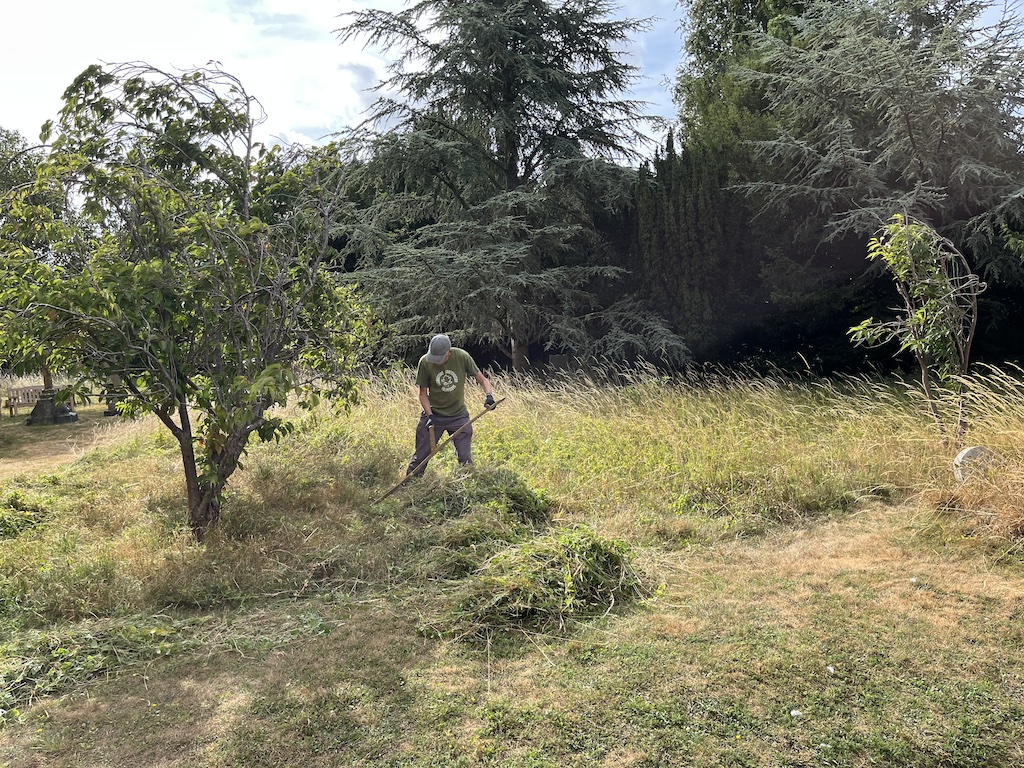 |
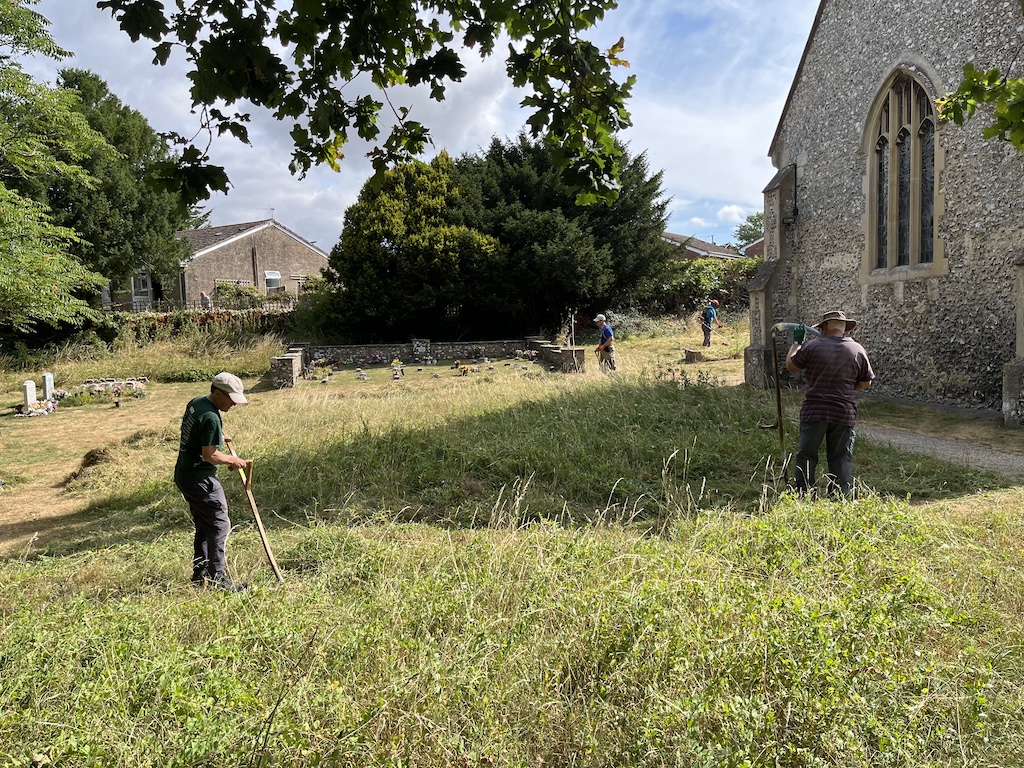 |
Scythers operating west of the church while Dave strims round the gravestones at a safe distance. (Image by Mike Norman) |
| The usual scrumptious selection of cakes! (Image by Mike Norman) | 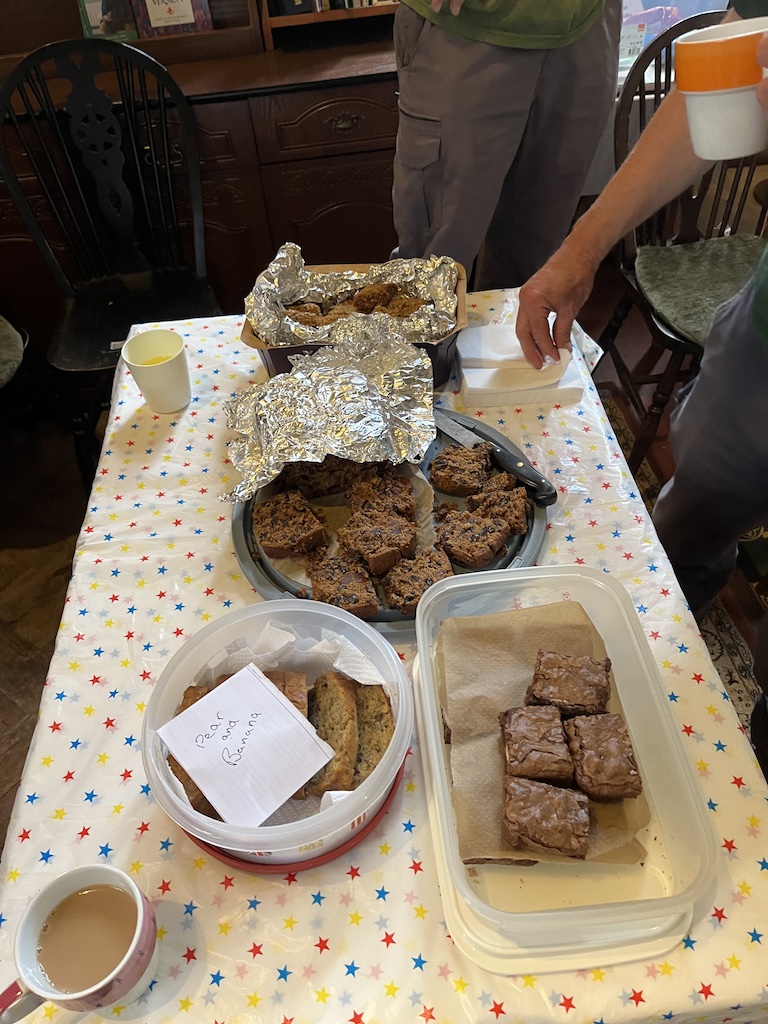 |
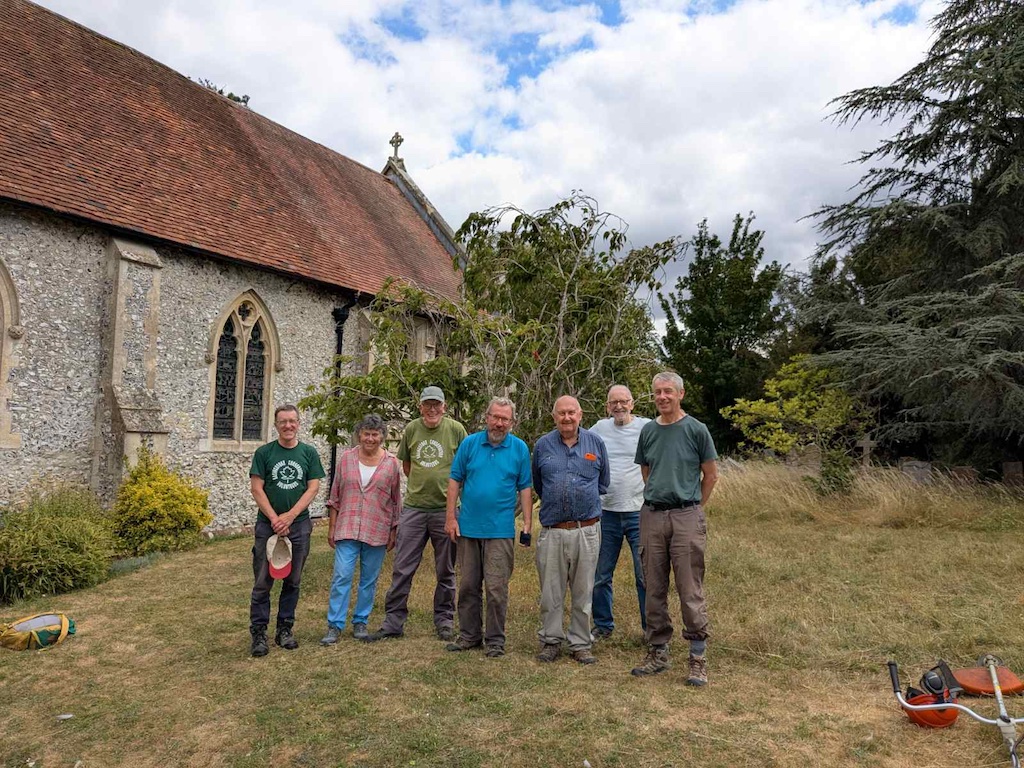 |
BCV and local volunteers at the end of a successful day. (Image by Mike Norman) |
May 2026
Bracken Bash at Pamber Forest, 24th May 2026
In spring our coppicing work in Pamber Forest finishes with the onset of the bird-nesting season and we move on to other tasks. One of these is the need to maintain some control over the spread of Bracken in the more open areas of the forest which are used by many invertebrates that like warm sunny conditions with lots of flowers providing nectar and pollen. Unchecked, bracken can proliferate, resulting in cool shady conditions and a build-up of leaf-litter. In the distant past, foraging Wild Boar and Bison would have disrupted this process, and historically Bracken was collected by villagers for use as fuel or animal bedding. In the absence of these alternatives, and without resorting to chemical sprays, another solution is to “bash” the bracken in the spring, causing emerging fronds to die back and weakening the underground rhizomes. Over several years, working different areas in a rotation, the result is a mosaic of scattered patches of Bracken and open grassy areas.
To carry out this process, a small group of BCV’ers assembled by the Pamber woodshed on a warm sunny morning and were supplied by Graham with our own supple rods of Hazel with which to bash the emerging fronds. We dispersed in all directions, tackling the thickest clumps of Bracken we could find. As the temperatures climbed (the start of a summer of heatwaves!) we were making good progress up until lunchtime when Graham decided that it would be too hot to continue into the afternoon.
| Un-bashed Bracken clumps near the woodshed (Image by Mike Norman) | 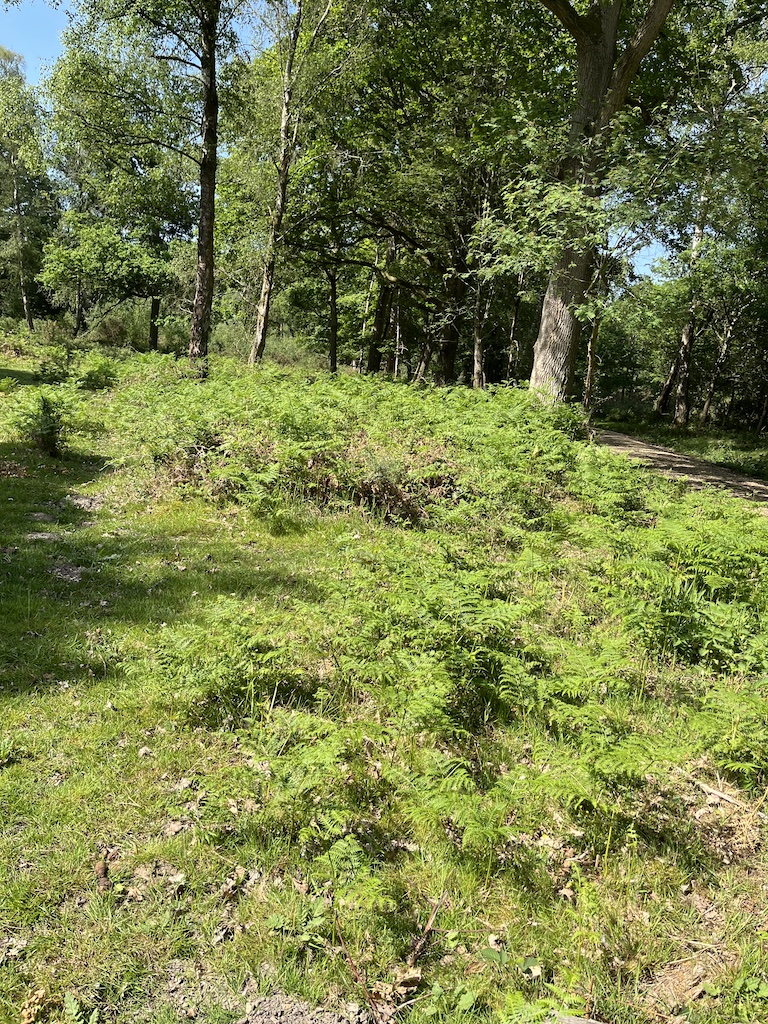 |
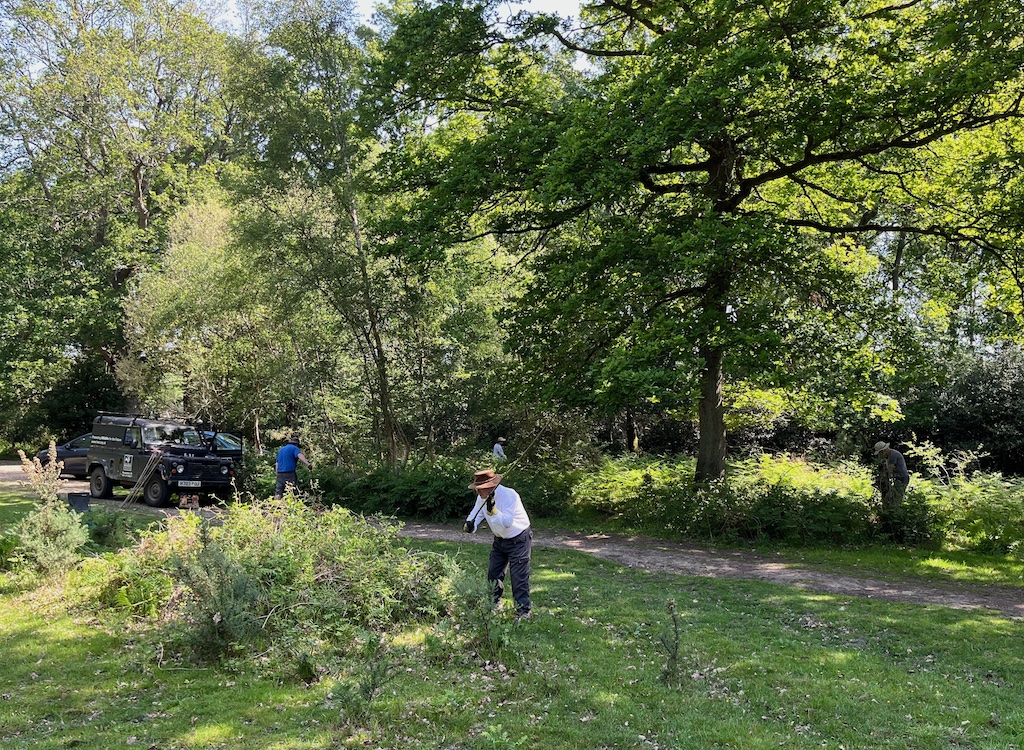 |
The team get started – David displaying a nifty technique! (Image by Mike Norman) |
April 2026
Orchid Count at Headley Gravel Pit, 26th April 2026
This Hampshire & Isle of Wight nature reserve to the north-west of Basingstoke is noted for its large population of Green-winged Orchids flowering each spring. The site is managed by selective mowing of the open areas in late summer and targeted winter scrub clearance when and where appropriate. Every few years it is important to count the number of flowering orchids to check whether the management programme is having a beneficial effect. On another bright sunny morning a strong team of volunteers arrived to help the warden Graham carry out this task. Having been given guidance on what the orchids look like and under what circumstances any plants should be included or excluded, each volunteer was allocated a specific area to count. As each person finished their area, they would report the numbers back to Graham and be allocated a new patch. Given a team of 10 volunteers, the main areas for flowering were soon being counted and by late morning it was decreed that we had finished! The final score was a little over 1,100 flowering stems, a decent number, but lower than some previous counts where up to 5,000 have been found. Possible reasons might include year-on-year variation due to the recent dry spring weather, deer and rabbits eating the flowering spikes and/or the build-up of moss which might be affecting germination of new plants. These results will be used to help review the management plan. With the main task completed, a tour was made of the reserve looking out for any other significant wildlife that should be recorded. The birds included Woodcock and Redpoll; the butterflies Holly Blue, Grizzled Skipper and Small Copper and the plants Heath Dog Violet, Three-veined Sandwort and Parsley Piert.
| Orchid-counting can be a rather odd-looking activity! (image by Mike Norman) | 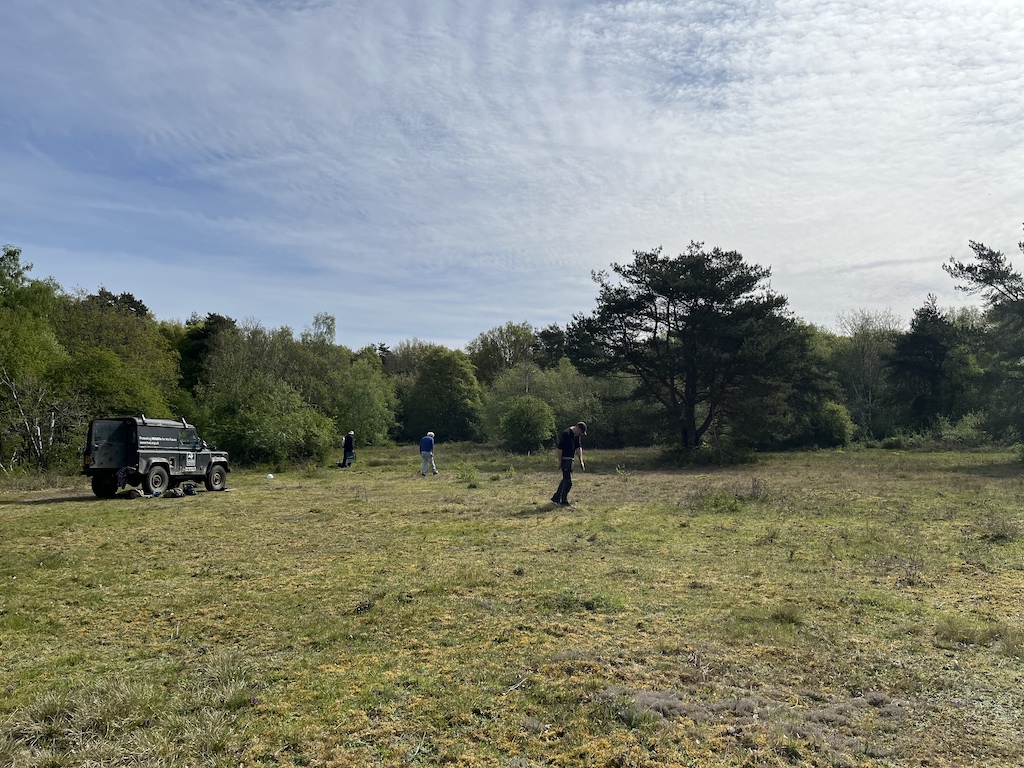 |
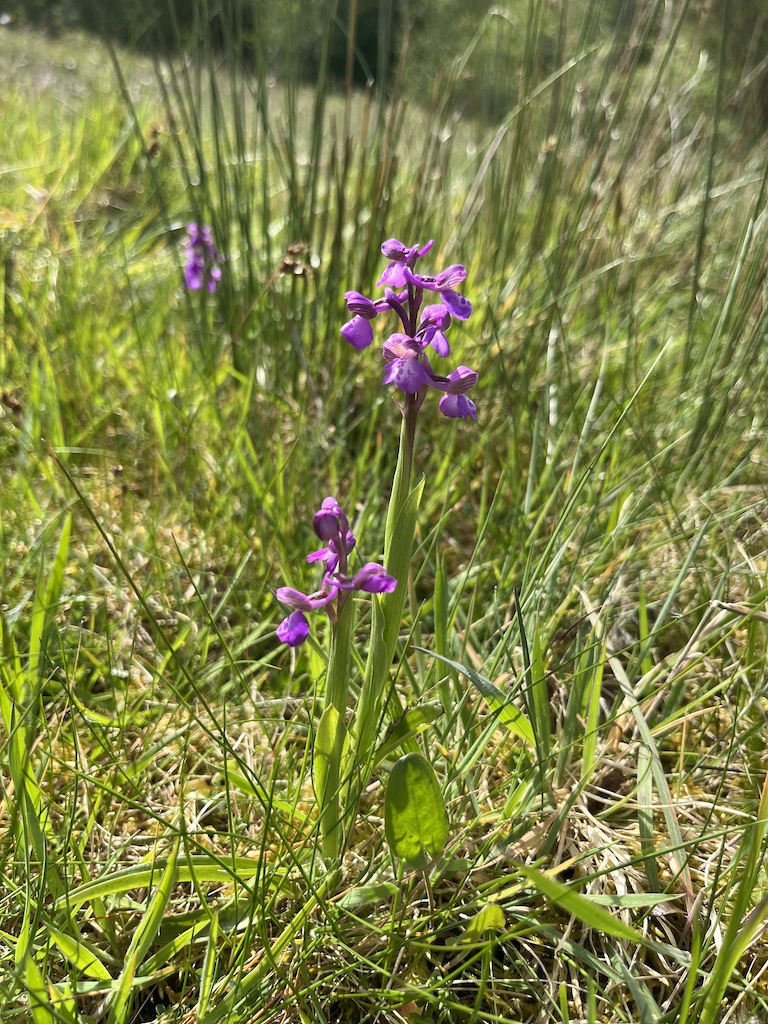 |
Green-winged Orchid flower spikes. (image by Mike Norman) |
| Small Copper butterfly. (image by Mike Norman) | 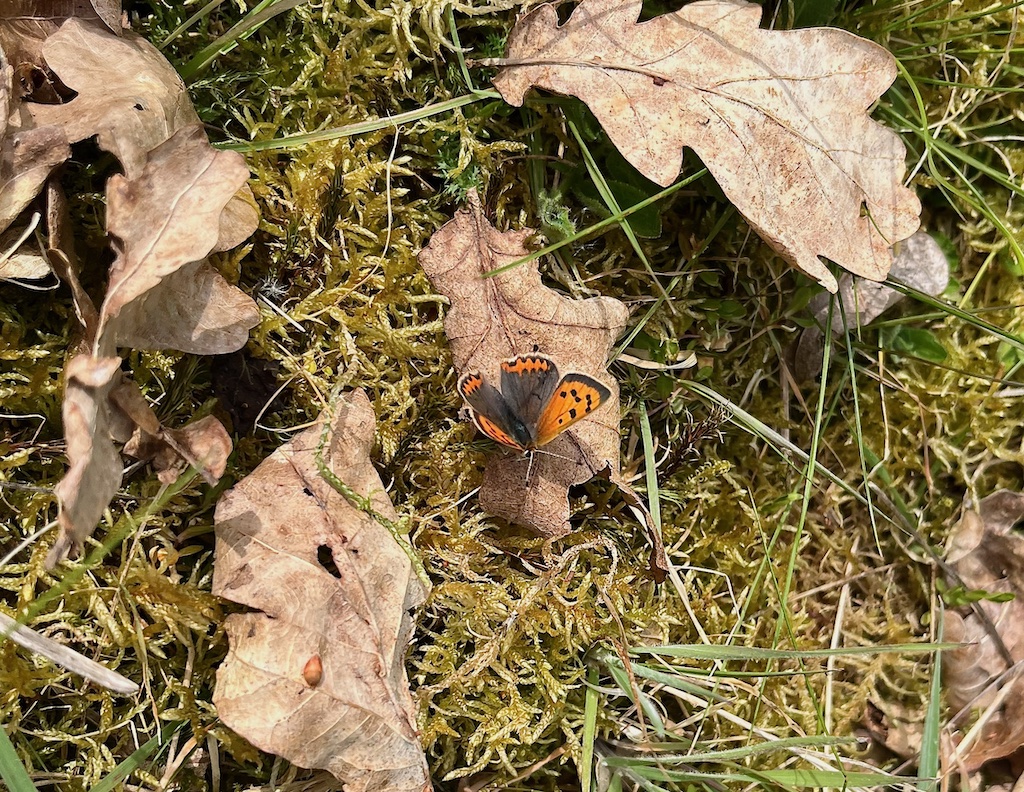 |
Rush-cutting at The Hatch, 12th April 2026
This visit to Hampshire and Isle of Wight Wildlife Trust’s restored fen reserve at The Hatch near Old Basing completed our run of mowing on grassland sites this spring. As elsewhere, the aim is to use scythes to cut back the more vigorous grasses, rushes and sedges to allow smaller plants to compete, thus boosting biodiversity. The cut material is raked up and piled into heaps to stop the new growth from being smothered. As is traditional, a nice sunny day greeted our team of scythers and rakers. As this is quite a large site, we concentrated on the areas with the thickest, driest growth from last year, leaving the damper areas where the the build-up of “thatch” was not so strong. Leaving some areas also means that invertebrate species that depend on thicker cover are not too adversely affected. With good numbers of volunteers, we were able to make steady progress through the day, allowing us to leave the site in mid-afternoon, just before showery conditions were about to arrive.
| Dave, Dave & Paul form a mowing “gang” in one of the thickest areas. (image by Mike Norman) | 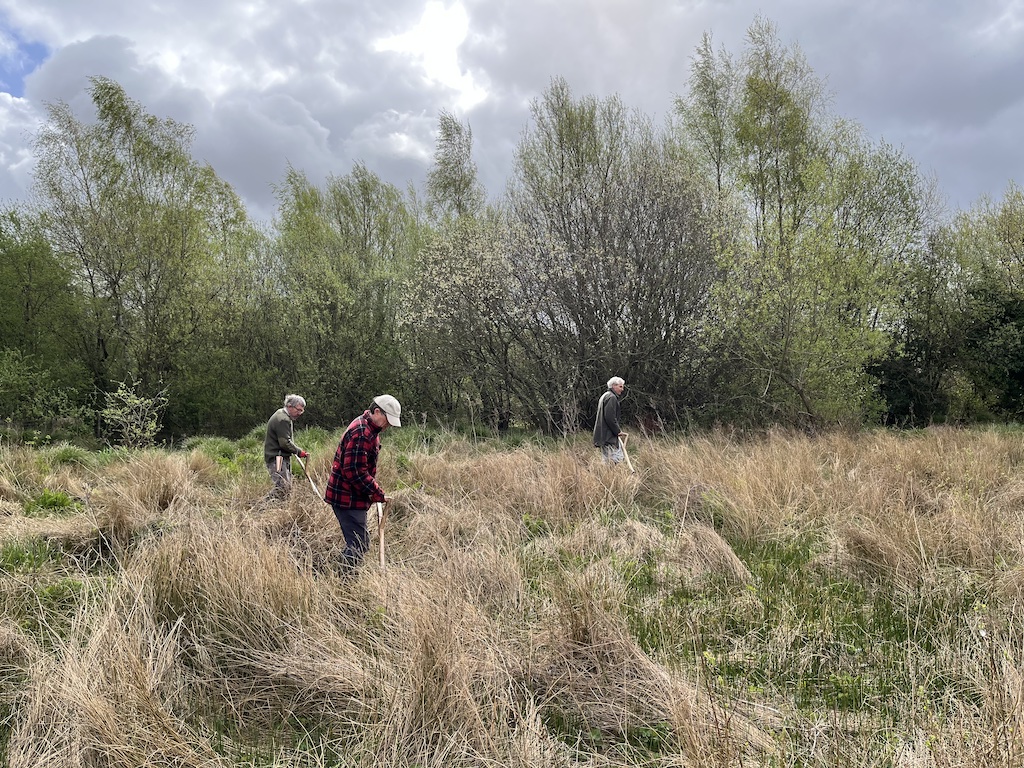 |
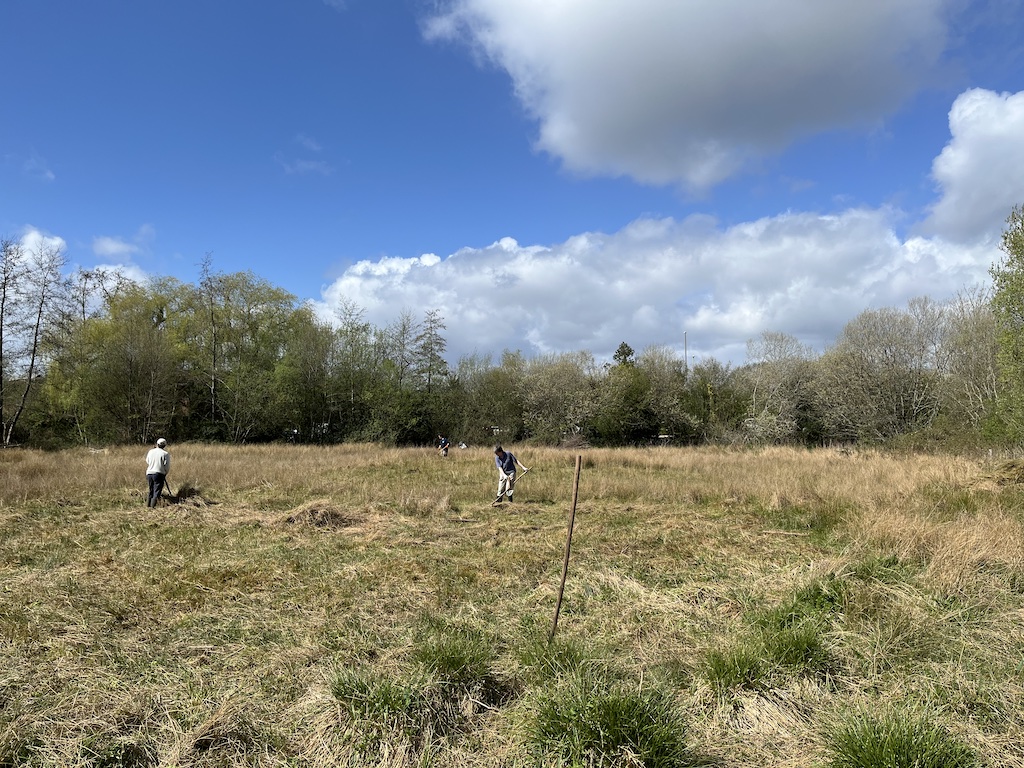 |
Cutting in progress across the site late morning. (image by Mike Norman) |
| The cut material is piled up, providing egg-laying opportunities for Grass Snakes. (image by Mike Norman) | 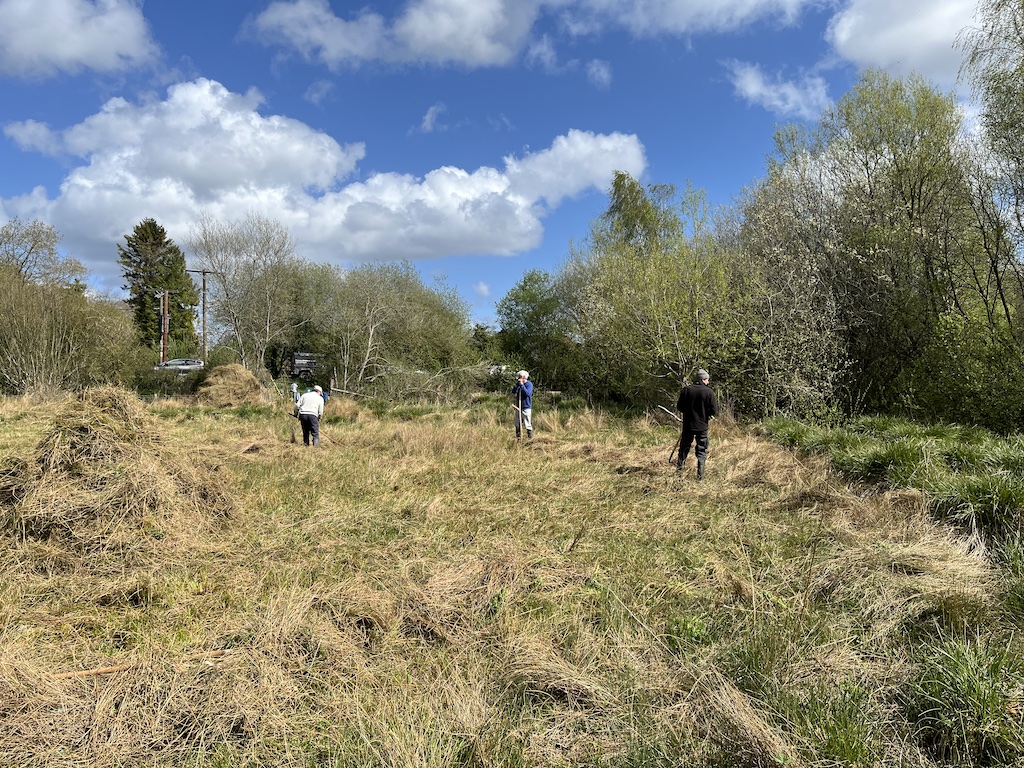 |
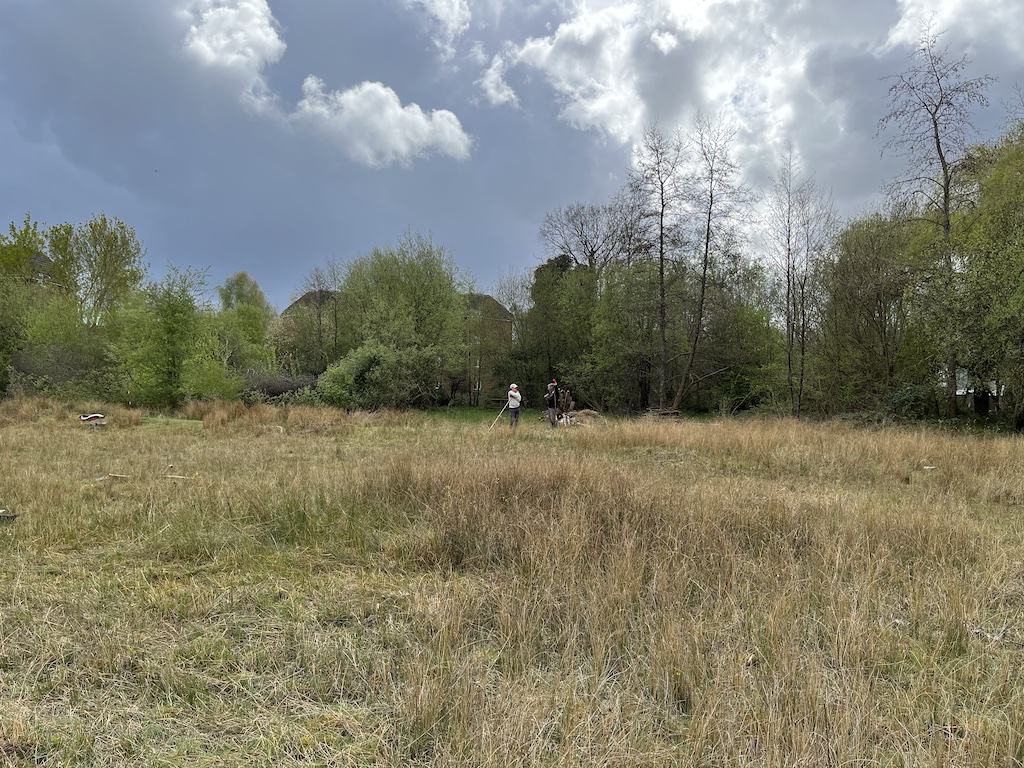 |
The end of the day, with shower clouds starting to approach. (image by Mike Norman) |
March 2026
Rush-cutting at Mapledurwell, 29th March 2026
We continue our scything odyssey at another location! Mapledurwell Fen is another small remnant of calcareous fen near Basing that has been described botanically as “the richest half-acre in Hampshire”. A HiWWT reserve, the site does receive some light grazing, but the vegetation is also mowed in order to clear matted dead plant material (“thatch”) and promote fresh growth of some of the more vigorous plant species, such as blunt-flowered rush, making them more palatable to the cattle. To that end, we teamed up with reserve manager Graham Dennis to cut the northern end of the fen with scythes and stack the cut material into heaps. On a day that started sunny, we had a strong turnout of ten volunteers, so we quickly moved into action, with the more experienced scythers showing the ropes to interested beginners. While we were busy cutting and stacking, Graham and one or two others cleared up some willow brash that had been left on the fen after being cut around the margins of the site by the reserves team. As the day wore on, the weather slowly deteriorated, but by mid-afternoon, as the rain started to spit, we had completed the entire area to the north of the brook and a smaller area of thicker vegetation to the south, allowing us to make our exit without getting too wet.
| Getting started with the scythes (image by Mike Norman) | 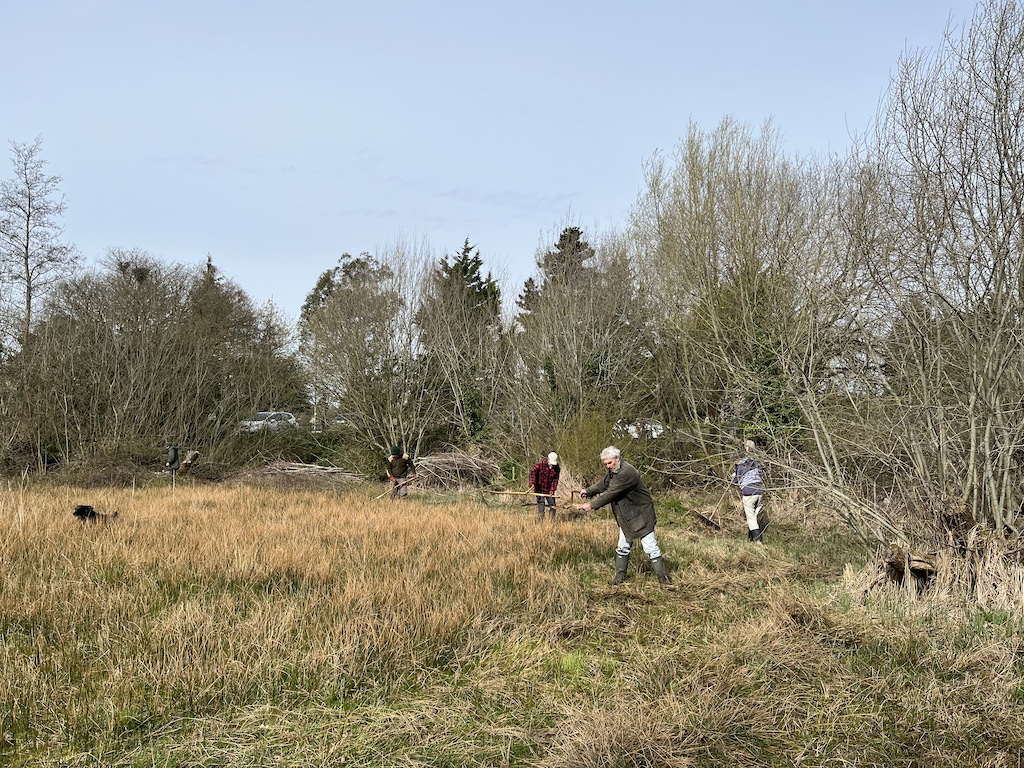 |
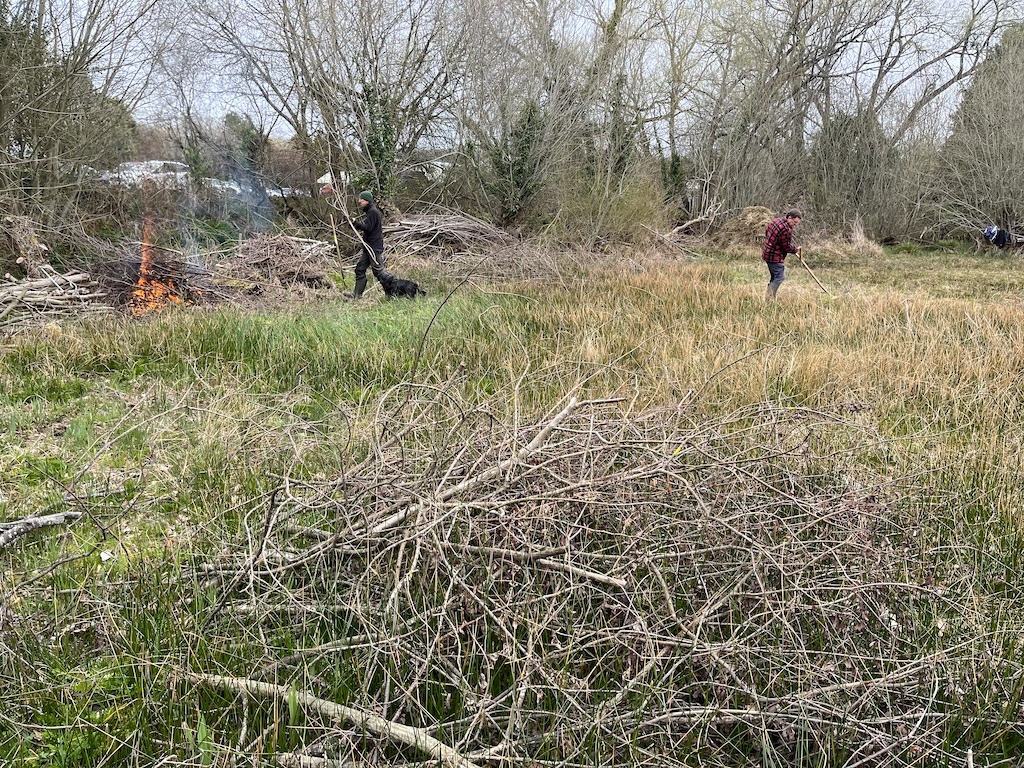 |
Clearing the piles of willow brash (image by Mike Norman) |
| Making good progress as lunchtime approaches (image by Mike Norman) | 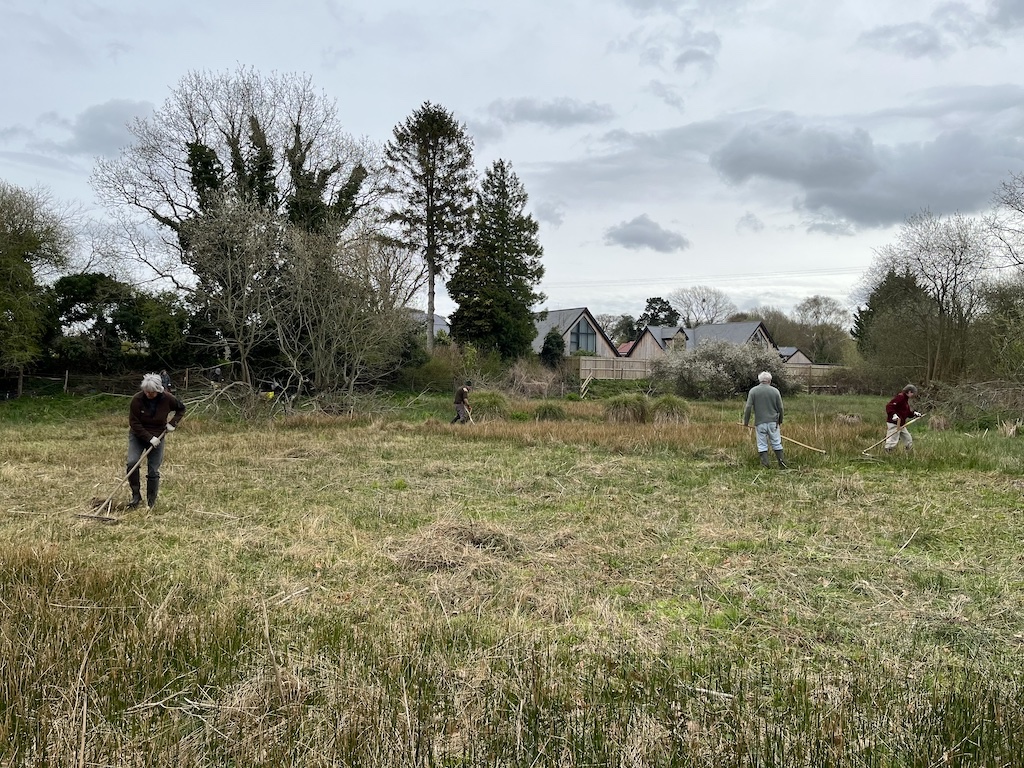 |
 |
The site at the end of the day (image by Mike Norman) |
Fen-cutting at Paxton’s Meadow, Sherborne St John, 10th March 2026
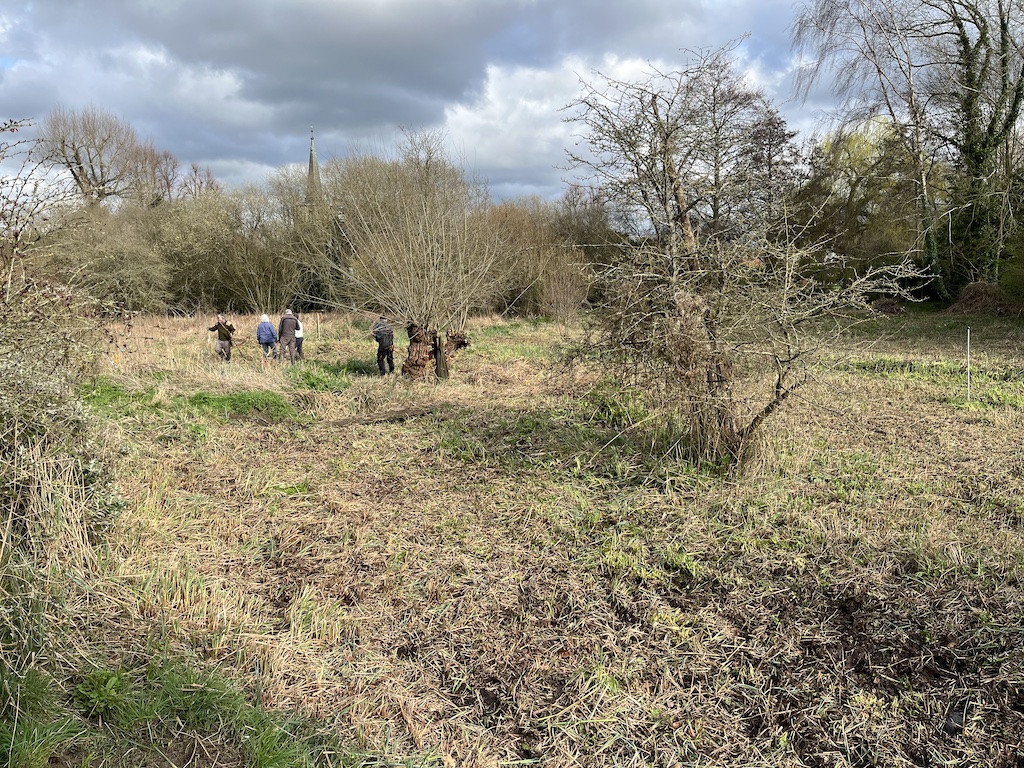
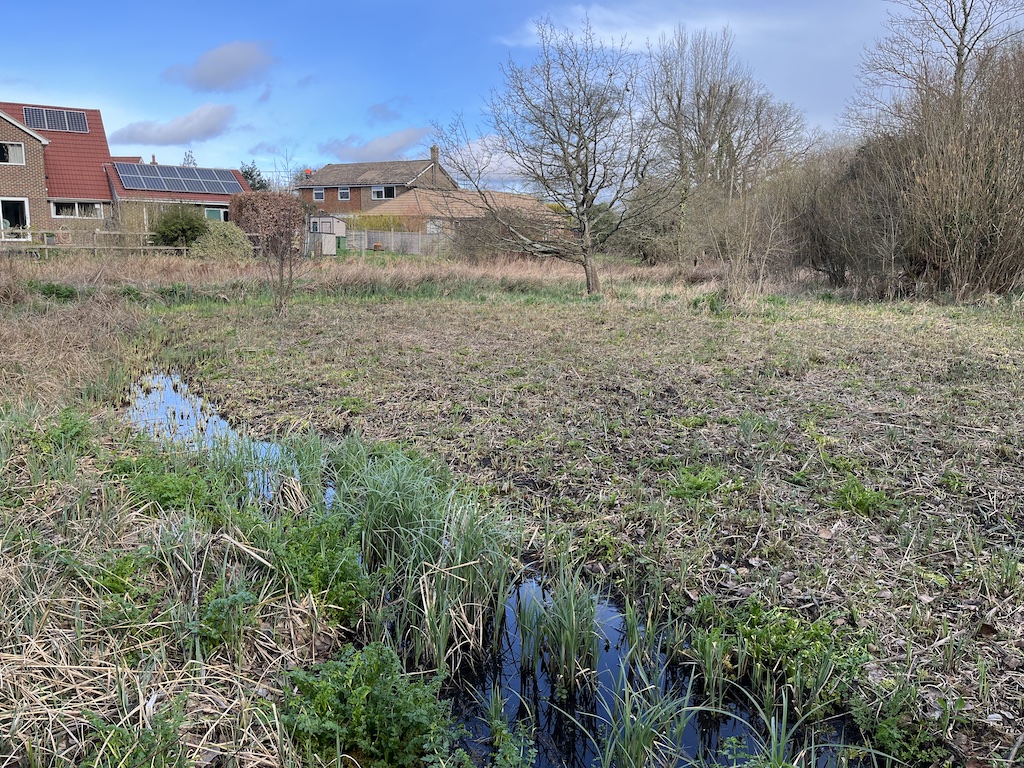
Today, we had originally planned to carry out work on Cliddesden Churchyard but, when this was cancelled, it was an ideal opportunity to return to Paxton’s Meadow and pick from where we left off on the 1st. With a larger team, it was possible to make steady progress, completing the area beyond the stream by lunchtime and then moving onto the areas closer to the house and garden. Although this area is more complex, with small ponds, pollarded willows and patches of brambles, we were still able to clear all but the most northerly reaches by the end of the day. This will make the follow-up cut in late summer much easier and set the scene for the regular management in the future. In the near term, it will allow the more delicate fen plants to thrive this summer without having to deal with a thick carpet of dead vegetation.
| View across the stream showing area still to be cut (image by Mike Norman) | 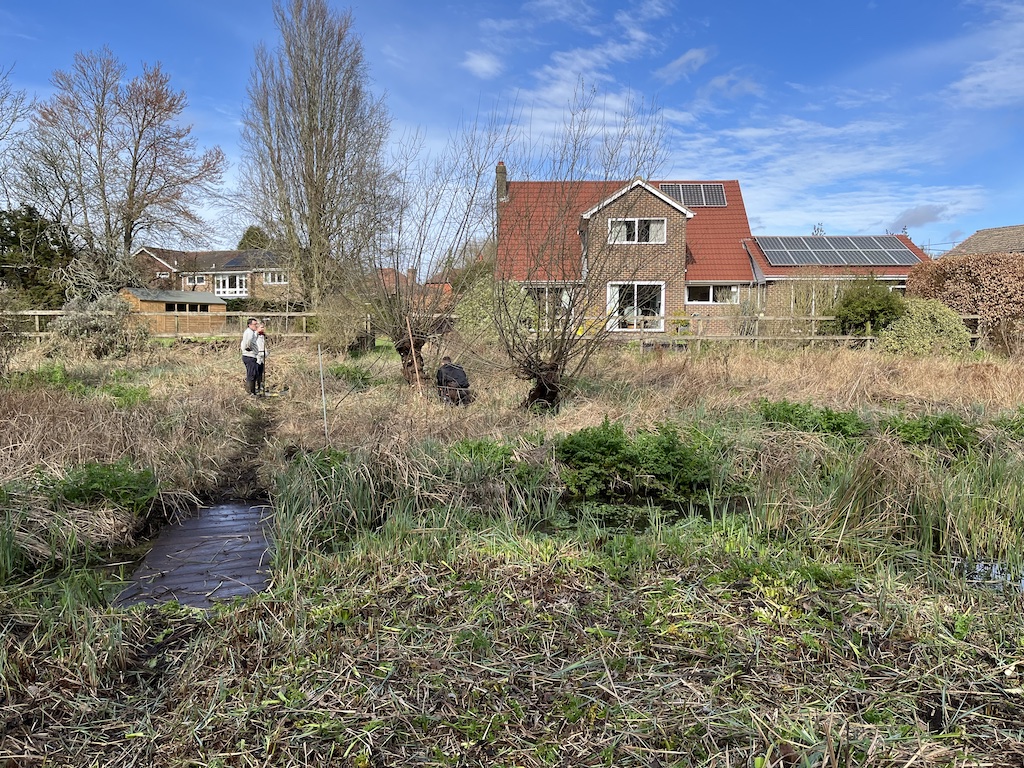 |
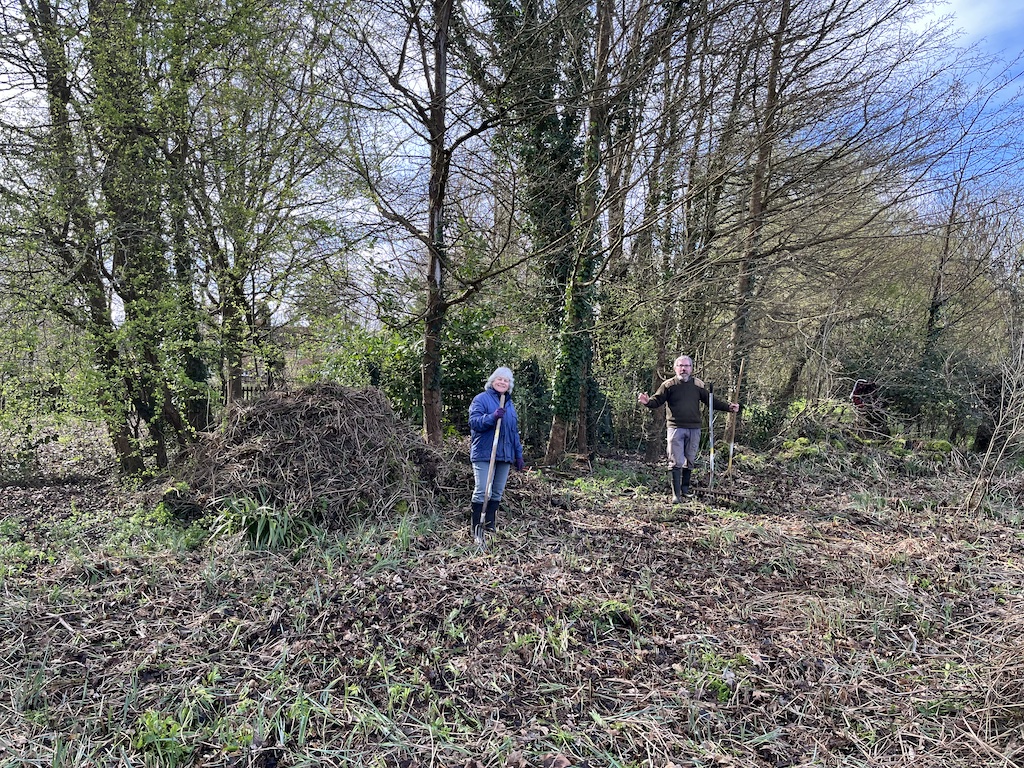 |
Kate and Dave take a break from stacking the cut material (image by Mike Norman) |
| Clearing the area on the near side of the stream (image by Mike Norman) | 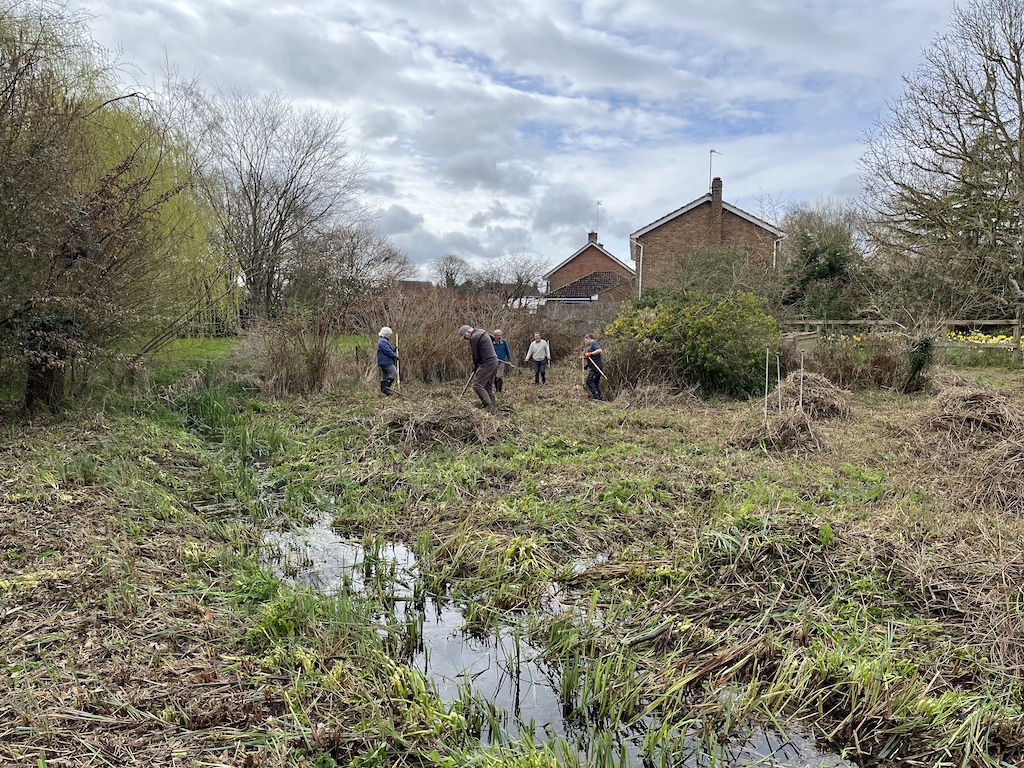 |
 |
The site at the end of the day (image by Mike Norman) |
Fen-cutting at Paxton’s Meadow, Sherborne St John, 1st March 2026
The winter coppicing season having closed at the start of March, this task marked the start of a concentrated few weeks of scything! This private site is a remnant of a once much larger area of fen on the spring line at the edge of the chalk north of Basingstoke. Some decades ago, the surrounding area was developed and sections of the fen sold off to owners of the adjacent properties. A number of these sections have been “reclaimed” and are now of little wildlife value. However, for several years BCV helped the previous owners of one property, who were very committed to preserving the biodiversity of their patch, to manage the site by carrying out an annual cut of the fen vegetation. Sadly, advancing age meant that the property eventually had to be sold and so we had not visited since 2022. This year, happily, we have been contacted by the new owners who are very interested in the fen and wish to reinstate a suitable management regime. After a meeting in January, in which the overgrown condition was very apparent, we agreed to visit in March to carry out what would be a “rescue cut”. We would then follow up with a cut in late summer, which is the best time of the year to remove vegetation to keep nutrient levels under control which aids biodiversity. A small but select group assembled on the first of the month and started work on to the main area of the fen beyond the stream. Although the use of a brush-cutter had been suggested, in the end it was found that the job could be done very effectively with scythes. With limited numbers on the day it was not possible to go much further, but this still represented a step in the right direction.
| The fen as it looked in January, having not been cut for three and a half years (image by Mike Norman) | 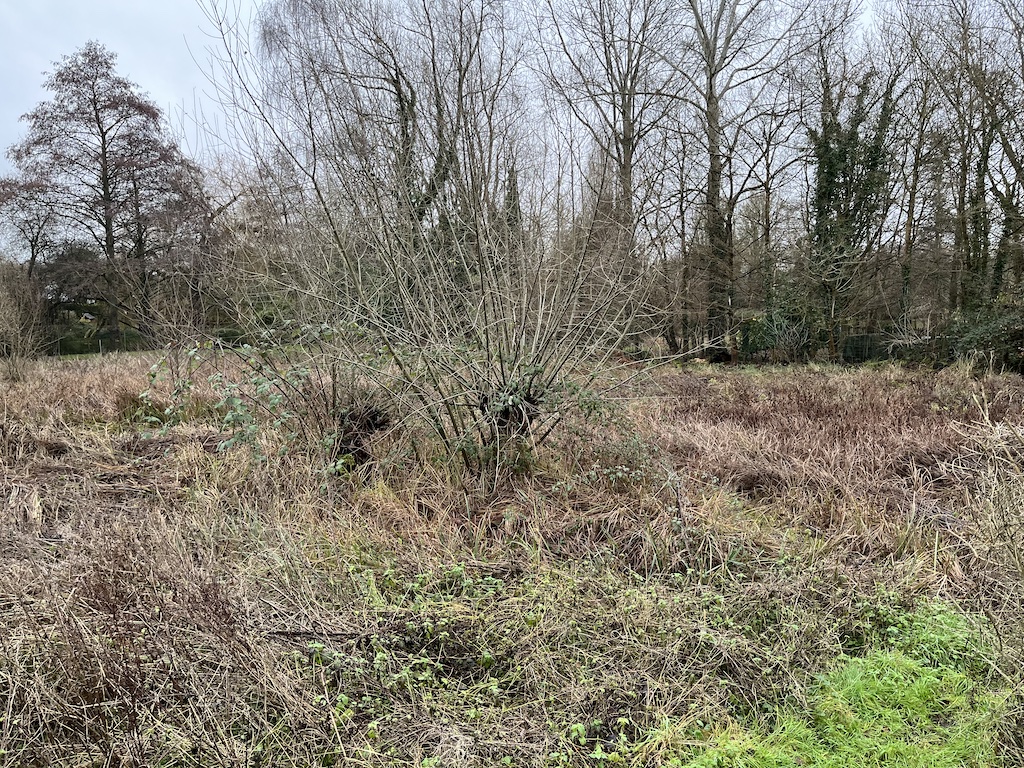 |
 |
The main area of the fen after being cut, with uncut fen in the background (image by Mike Norman) |
February 2026
Coppicing in Pamber Forest, 15th February 2026
TASK CANCELLED: It’s not often that circumstances require us to actually cancel an event, but bad weather can mean that it’s not actually safe to carry out the work, as well as being very uncomfortable for all concerned. This was one of those occasions, with heavy rain forecast for most of the day. Fortunately it was possible to contact everyone before they set out, but thanks go to all those who were prepared to brave the conditions!
Scrub Clearance at Field Barn Farm, 1st February 2026
Last winter we helped out with this chalk grassland restoration project on the Kingsclere Downs, clearing a stand of mature blackthorn scrub on a south-facing slope, allowing it to be landscaped prior to re-seeding and planting. This winter the focus has moved higher up-slope to try and cut corridors through some less-developed scrub. A good group of BCV’ers joined Andy and Graham from Butterfly Conservation, working on quite steep ground to tackle a mixture of hawthorn, blackthorn, privet and dogwood. Paul and Dave wielded the brushcutter on some patches of bramble. By the end of the day good progress had been made, with the cut material being rolled down the hill for later disposal.
| The work site at the start – last winter’s site is the bare chalky area at centre left. (Image by Mike Norman) | 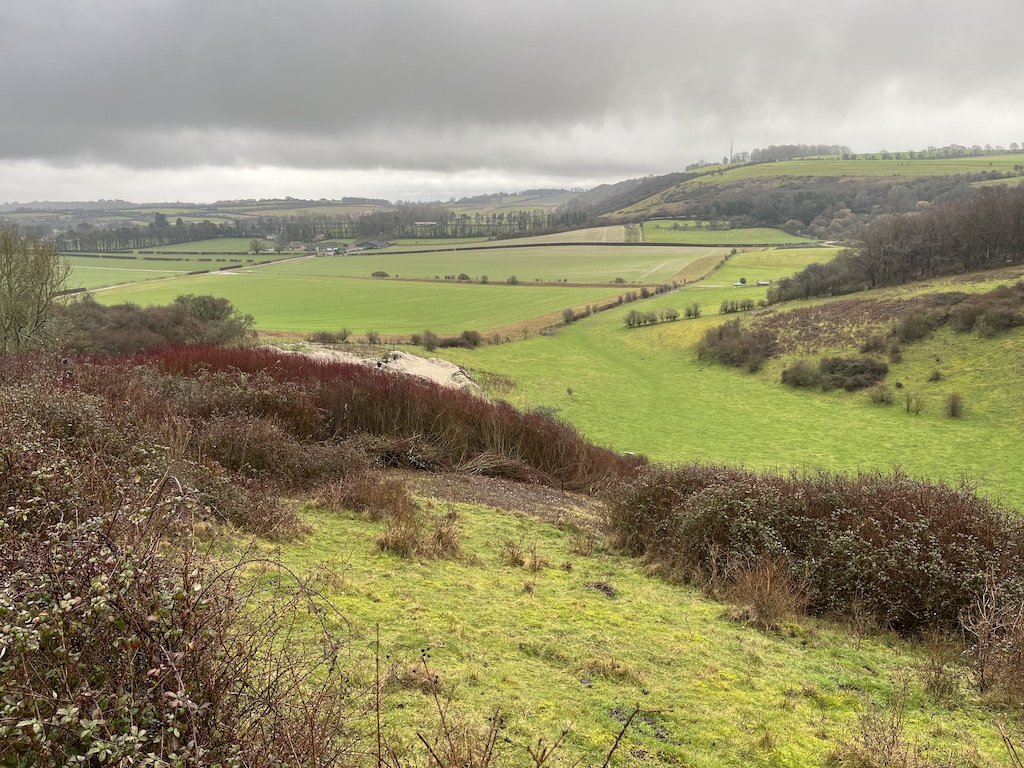 |
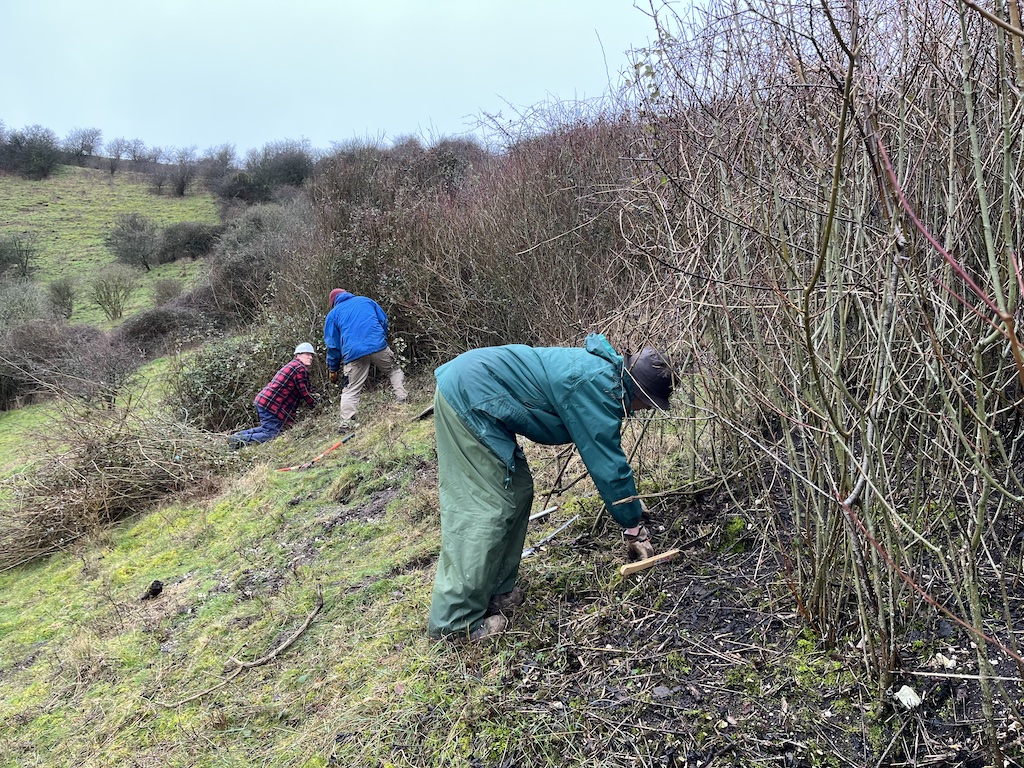 |
Working up the slope from below proved the best method (image by Mike Norman) |
| Preparing the piles of cut material for sending down the hill (image by Mike Norman) | 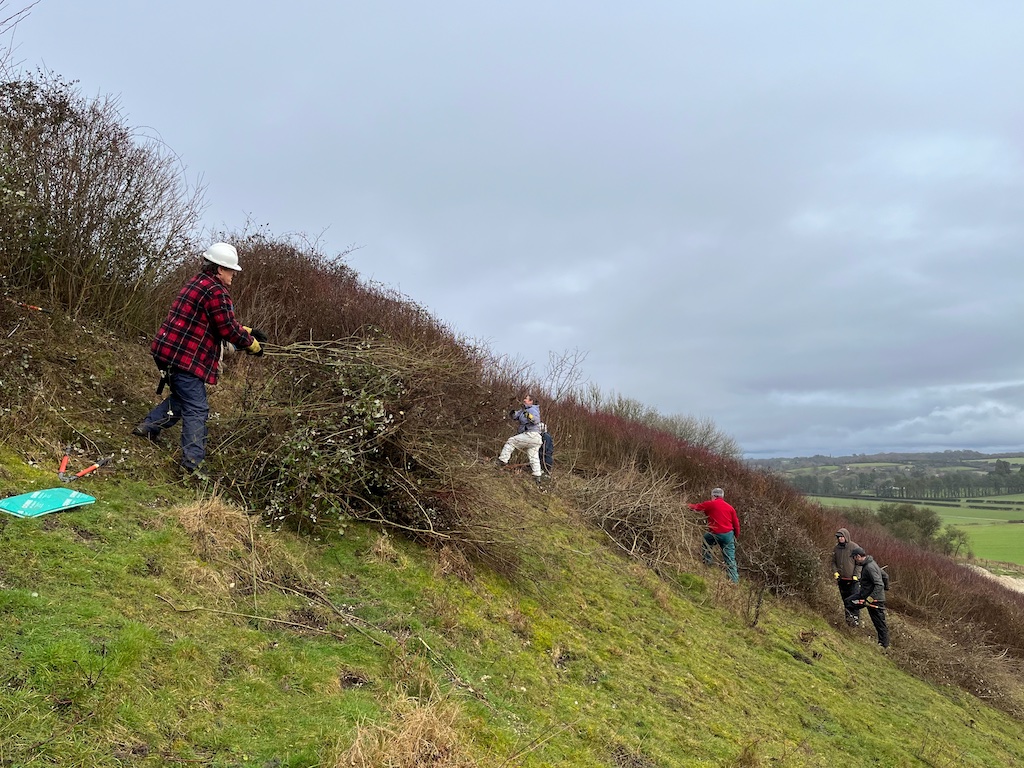 |
January 2026
New Year’s Walk at Mortimer West End, 25th January 2026
A sizeable group gathered in Mortimer West End for the traditional New Year’s Walk. We set out from Graham’s house into Benyon’s Enclosure, an extensive area of managed woodland, heading for Kiln Pond. There we hoped to find Goosanders, but unfortunately they were not around that morning, just some Mallard, Tufted Duck and a couple of Gadwall. Heading west then north, we spotted the typical woodland birds – Blue, Great and Long-tailed Tits, Great Spotted Woodpecker and wintering Redwing. Graham showed us Cauliflower fungus and Paul found a Spring Usher moth. We traversed an area where gravel is being extracted before crossing to Burnt Common, where we checked out the main flooded pit, finding a good number of Shoveler, a few Teal, Egyptian Goose and Black-headed and Lesser Black-backed Gull. We also heard and then saw a Woodlark. Heading back to Mortimer, we briefly encountered a small group of Crossbill moving through the tops of the conifers. After the walk, a number of the party enjoyed a convivial lunch at the Calleva Arms in Silchester.
| The group enjoying some welcome sunshine in Benyon’s Enclosure (Image by Lesley Davies) | 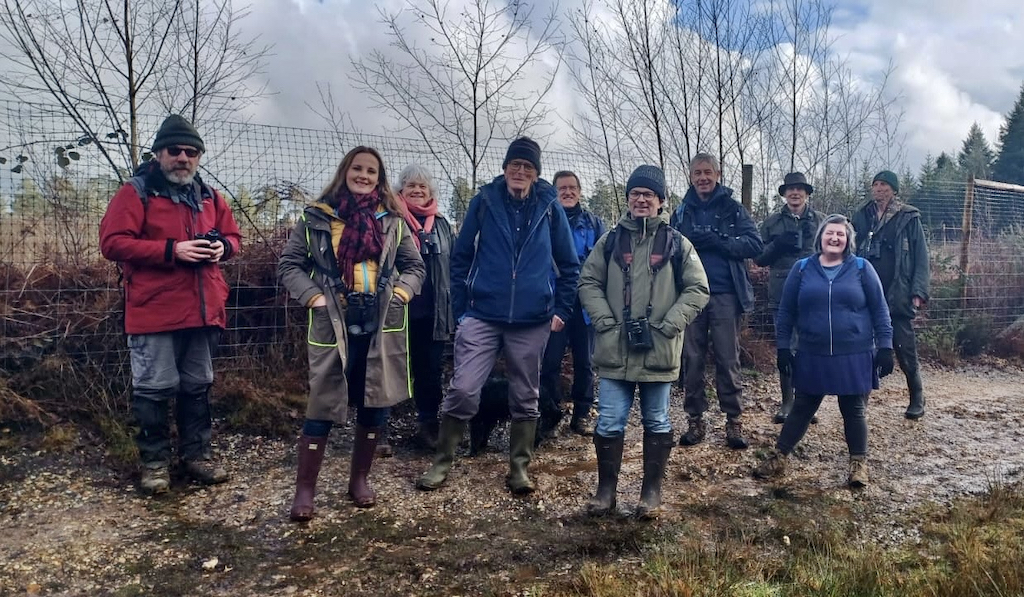 |
Scrub Clearance at Hook Common, 4th January 2026
Our first task of 2026 was a scrub-bash on Hook Common to the east of Basingstoke, carrying on the work from last October. This scrub clearance is particularly targeted at reptiles and so we were working alongside Hampshire & Isle of Wight Amphibian and Reptile Group (HIWARG). With kind weather and both groups on site, we were able to clear another impressive area, despite the usual attentions from the livestock!
| The cattle take their usual close interest in our activities! (Image by Stuart Shurlock) | 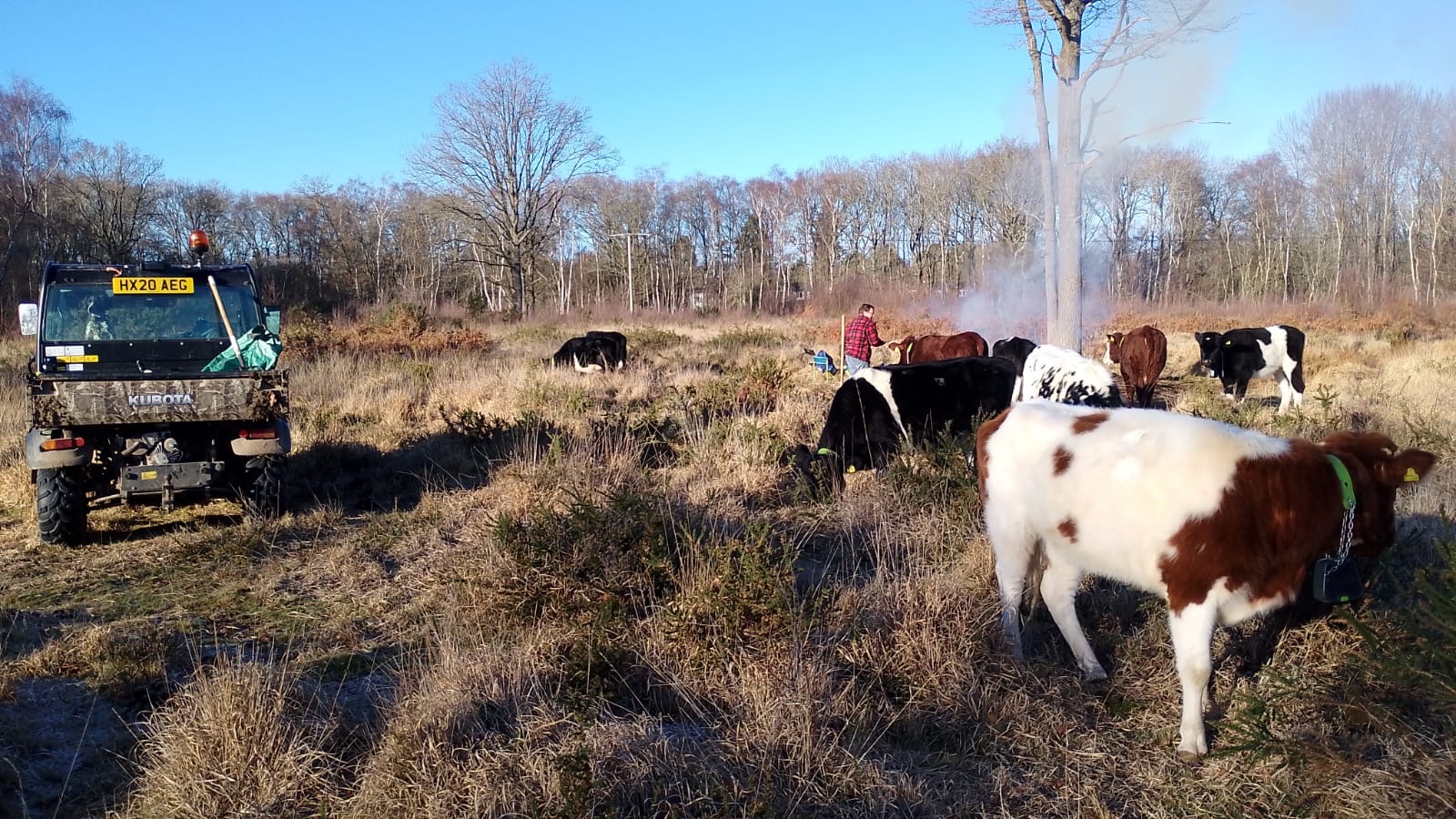 |
Old News
News 2025
News 2024
News 2023
News 2022
News 2021
News 2020
News 2019
News 2018.